Shawna Peddle:
Good morning or good afternoon, wherever you’re joining us from. I’m Shawna Peddle, the Associate VP of Citizenship at Co-operators, and it is my pleasure to welcome you to our learning session today that spotlights the ICMIF Foundation’s Insurance Innovation Challenge and the power of partnership in supporting vulnerable communities. So let’s kick it off with an icebreaker to warm us all up for a little bit of learning today. How are you feeling right now? Georgina’s going to pull up a poll and we’ll revisit the question again at the end of the session to see if we kept you entertained and engaged over the next hour together. Georgina?
So I am very happy to say that 80% of you are feeling curious today, and this is really inspiring for us continuing on with our webinar and it makes me feel really hopeful for today because I think with everything that’s going on in the world around us right now, knowing how we can come together, knowing how we can support each other in our communities, is really more important than ever. So I’m hoping that you will feel inspired as well as curious by the end of our session.
So it seems like we’re back on track to keep going with our time together, but we still have some work to do. So thanks everyone. Before we get started, I’ll ask you to please keep your eyes open for an evaluation form in the chat. The evaluation form helps us to understand whether or not what we’ve talked about has really hit the mark, where we can do better and how we can better communicate this type of information to audiences in the future. So if you do get an opportunity, please before you leave today to complete that, we’d be grateful. We’ll also be sending you an email with more links at the end of the session.
So I’m joined today by Sabbir Patel, CEO and managing director of the ICMIF Foundation and Chantelle Moore, manager of social impact for Gore Mutual. Both of these lovely people have become friends over the time we’ve worked together, sharing our values and our ways of working. Chantelle and I are at the point of wondering if we’re actually on the same team. I’m hosting you today from our corporate offices in Guelph, Ontario, which is part of the Between the Lakes Treaty territory and the traditional lands of the Mississaugas of the Credit First Nation and the ancestral homelands of the Anishinaabeg, the Haudenosaunee, and the Attawandaron people. I thank the indigenous stewards of this land and I acknowledge that our work is carried out across the traditional territories of First Nation, Métis and Inuit peoples across the country. This grounds my own journey towards a path of truth and reconciliation with our indigenous neighbours, our clients, our members, our employees, and our partners.
I won’t ask you all to put your land acknowledgement into the chat, but if you could just take a minute to think it through. Think about what those lands mean to you and what acknowledging the stewards of our lands and the original peoples means to you and what it means to your roles in the organisations you’re supporting today.
Hosting a session that’s close to Earth Day also reminds me as well that we’re all part of something bigger and working together will get us there further, faster. It comes from indigenous teachings. If you’re working together and you’re working as a community, you’re only going to build more resiliency together. Collaborating always has always been at the heart of the cooperative and mutual insurance model. In recognition of the international year of the cooperative, we’re proud to continue our partnership with Gore Mutual as co-hosts today, highlighting how collaboration is shaping innovative insurance solutions. Two insurance competitors co-hosting a session for our employees is definitely unique, as is our relationship and our partnership in Gore Mutual’s Climate and Equity Lab, which Chantelle will talk a little bit more about later in the presentation.
We come at this partnership focused on the cooperative principles of concern for community and cooperation amongst cooperatives. In solidarity and in our understanding of the issues that are facing our world today are far bigger and far more complex than any single organisation can tackle alone. And honestly, I think that’s even gotten more complex in the past two or three months, if any of you have noticed.
I lead all of our community partnerships and corporate giving here at Co-operators, and the majority of our work supports Canadian communities from coast-to-coast-to-coast. Our support of the ICMIF Foundation is different. We know that we’re all one community regardless of where we live and that we can leave no one behind if we want real action for the challenges we’re facing. Co-operators and Gore are both members of the International Cooperative and Mutual Insurance Federation, the only global membership organisation for the cooperative and mutual insurance sector. Sabbir will speak more about the ICMIF Foundation, but they’re the charitable arm of ICMA. With the goal of building community resilience in the developing world, they believe engaging with communities to help them understand their risks, educating people on risk reduction, prevention and management, and empowering communities to manage their risks through access to affordable and appropriate micro-insurance is the best path forward towards building stronger communities. Co-operators have supported the work of the foundation for years with our CEO, Rob Wesseling currently acting as the chair of both ICMIF and its foundation.
Our purpose as an organisation is enabling financial security for Canadians and our communities. We also adhere to the international cooperative principles, specifically cooperation amongst cooperatives and concern for community. So while we operate in Canada and the needs here are so great, we’re driven to broaden that impact beyond our borders and the foundation allows us to be part of something bigger while also driving brand value, employee engagement and our sustainability goals and living our cooperative identity.
Our work with the foundation aligns with our values and contributes to our broader goals of sustainability and resilience. Social impact is critical, but this is also about the wider strategy for the business and how the partnership can support us in achieving and customer objectives and specific strategies. This isn’t just about a donation or goodwill, it’s real value to the bottom line. And I think that that’s the way that we’re starting to think about community impact and think about how we invest our dollars, that it is very, very good to give back, but we also have to be starting to think about how we can support the business and how we can support the business goals so that we can make more money so that we can continue to do good.
So those things used to be in opposition to each other, but now they seem to be getting stronger and stronger and coming together and the ICMIF Foundation is one of the ways that we can make that happen. Our support gives us an international dimension to our efforts to build resilient communities, impact the United Nation’s sustainable development goals, and promote equity, diversity and inclusion while leading with our cooperative values. We also see opportunities to readily engage in global issues and show understanding and integration with community-focused local programmes like the Climate and Equity Lab, while also bringing in insight and knowledge from emerging markets to key areas of our work.
We’re excited as well to explore opportunities for meaningful storytelling and impact and customer and staff engagement. I’m going to step back for a few moments and introduce Chantelle Moore from Gore. We’ll then have another interactive moment followed by Sabbir from the ICMIF Foundation. And I’ll see you all again towards the end for a wrap up in a Q&A. I’ll ask you to please drop any questions that you might have into the chat as we go along and we’ll come to them at the end of the session. Thanks. Chantelle?
Chantelle Moore:
Thank you, Shawna. It’s such a pleasure to hear you speak about the connection of social impact, your history and how you engage your business in all that you do and that important connection between all. So thank you.
Hi everyone. As Shawna mentioned, I’m Chantelle Moore, and it’s my pleasure to be with you here today representing Gore Mutual. We are really thrilled that we have the opportunity to partner with the Co-operators, not only within the Climate and Equity Lab, but standing alongside each other to support the important innovative insurance challenge, our competition with ICMIF Foundation. So how did we get involved and how does this connect to our purpose here at Gore, which is insurance that does good? We were really inspired by the mutual values that we share not only with Co-operators but ICMIF Foundation and that shared belief in the mutual advantage of cooperation, which as Shawna said, we’re living a time where to go further is to go together.
And we understand this as a core value here at Gore Mutual, and we know we share that with our friends over at Co-operators as well. So when provided with the opportunity to support ICMIF Foundation, we jumped at the chance, which happened in 2024, so last year. And we knew that we had an opportunity to connect mutuals and cooperatives globally to build local resilience. That means the support of small scale farmers who wouldn’t have support to protect themselves, their livelihoods and their future, providing them an opportunity to change that and being a part of that small group of like-minded organisations standing alongside ICMIF Foundation to do this great work.
We also know that women-led small businesses do not have the same opportunity to gain affordable inclusive insurance in many other places of the world. And we knew here at Gore Mutual that we wanted to be a playing actor in this group of individuals and companies that started changing this, not only within our own communities here in Canada, but we don’t see these issues having borders just like climate doesn’t have any borders.
So why did this resonate strongly with us? It’s that spirit of ingenuity and resilience that has driven Gore Mutual to triumph and to bounce back from so many obstacles and challenges that we’ve had since 1839, from being there for our communities from the First World War, the Great Depression, the Second World War. We have never fell backwards when understanding that it was actually us that needed to move forward and bring others with us that was going to make this change that is so critical and again, has no borders. So here at Gore, we understand that now it’s our time to stand alongside others in the climate crisis that we’re all experiencing. This is happening in our backyard, this is happening in communities all over the world, and we understand that building resilience within communities is the best way forward to protect ourselves from a climate crisis.
And I know Sabbir is going to touch a little bit on this, but here in Canada last year, seeing over 8 billion in climate-related insurance claims, which is record-breaking from the year before that, this is integral for our business, for our communities, for our neighbours, for our industry, for our country, for our planet. And when we think about the theme of Earth Day this year, which is our power, our planet, standing alongside Co-operators, building resilience within our communities, making sure that those who are most vulnerable against the impacts of climate change, is a responsibility of those who are closest to the issue. And insurance organisations are the canary in the coal mine. Who calls us right after EMS? All of our customers and clients. We are right there for them when they need us the most.
So that was one of the key issues, and that really propelled us to support not only climate and equity-related issues here at home, but climate and equity-related issues abroad through ICMIF Foundation, through this incredible Innovative Insurance Challenge. But what also really inspired us is that for many of us here at Gore Mutual, for many of our broker partners, for many of our customers, we may reside here, but our roots are from everywhere around the globe. And so are our families and our friends. And when we think about making sure we’re supporting our family, our friends, our employees and broker partners, what if that means supporting the roots of where they come from? And when we heard of the incredible stories of innovative micro-insurance taking place in other places of the world like the Philippines, like Sri Lanka, like Nairobi, like Malawi, we were inspired and understanding that I have friends and colleagues working right across from me where I know this is where their roots originated from. I want to ensure the success of everyone around their family table. And so that was another very significant reason why we supported.
But to get back to the Climate and Equity Lab, when in 2022 we reconnected and refreshed our social impact strategy to say the areas of poverty, equity and climate change align to the United Nations sustainable development goals through the insights of our people, we knew these areas were the most important to us. But then we realised how interconnected these areas are and what a wonderful opportunity for us to really drive change through social innovation way. And that is a longer process. It’s more than giving a check to an organisation. It takes commitment, it takes discussion, it takes an iterative approach of working with others where you have to put down competition.
And that’s what Gore Mutual did. So with Social Innovation Canada and our partners, York University and the cooperators, really diving into supporting local communities at that time within Waterloo region, GTA and Lower Mainland Vancouver, to support the most vulnerable within these communities, which are people living closer below the poverty line, which means senior citizens, those living with disabilities and others, that have far more obstacles when a heat dome strikes or flooding and wildfires strike, these individuals are most vulnerable and how are we going to protect them?
So we finalised the first phase of the Climate and Equity Lab last year, and that was the research phase. The research phase found that there were five levers of change that we could pull from. And working alongside Shawna and York and SI Canada, we really aligned on innovative housing solutions and building that community climate resilience from a community level. And I’m so excited to tell you that over this year we have been diving in with local groups in each of these three areas with also the strength and the power of cooperators behind us, to launch a national advisory council to scale these solutions and these prototypes of real change, driven at a place-based level, to drive these changes that we know to be true.
But here’s the incredible thing, it’s with the lived experience of those who are most vulnerable and bringing together groups like municipal government leaders, the insurance sector, charitable partners, individuals who are leading community change at an advocacy level, environmentalists sitting around a table as equals, hearing each other for the first time where they’re not usually crossing paths to say, how are we going to create these solutions together? And the work is exciting and it’s happening. And we’re currently right now working in prototyping working groups in each of these areas, which consists of the members I’ve just shared with you.
So this is the way that we show what we stand for from 1839 to 2025, we’re still standing on the same values. We’re still sharing this ambition for the future, which is to sure that we have communities that thrive and are protected by all of us for all of us. So thank you very much for the opportunity to join you today. I’m going to pass this over to my friend at Shawna who’s got a new interactive element.
Shawna Peddle:
You know Chantelle, I’m going off script a bit and we’re really, really proud at Co-operators that this is our 80th anniversary. Gore Mutual has us beat by a hundred years, so congratulations. 1839. That’s blowing my mind a little bit.
Chantelle Moore:
You do look really young but so do we.
Shawna Peddle:
We take care of ourselves. So I have another opportunity for a moment of trivia, and I’m hoping that most people on this call should be able to answer this question. United Nations has declared 2025 as the International Year of Cooperatives. Georgina, can you pull up the poll so that people can answer for us about what theme they think they’ve chosen for the International Year of Cooperatives? Multiple choice.
Chantelle Moore:
No cheating. I know we’re all connected to the opportunity to cheat, but is that how we want to get it right?
Shawna Peddle:
I like as well that all four of these are lovely, so there’s no really wrong answer, but there is one right answer. We’re only having 20 people answer this one. So I think some of you might be hesitant or maybe haven’t dug into this quite as deep as we have, because of course this is our job. It’s our job to be able to make those linkages back to cooperatives and the UN for sure. So the answer to this question is B: cooperatives build a better world. With that, I’m going to hand it over to Sabbir CEO and managing director of the ICMAS Foundation to tell you more about their work and the insurance innovation challenge. Sabbir?
Sabbir Patel:
Thank you, Shawna. Good afternoon, everybody from not-so-sunny Manchester in the United Kingdom. And I must say after hearing from Chantelle and Shawna, I’m really inspired by what they’ve basically just shared with us and working almost 30 years for ICMF, you still get thrills at the back of your neck when you hear our members talking in such a way. And our chair, Rob Wesseling always asks us, “What gets you up in the morning?” And this is exactly what gets us up early in the morning to make a difference to people’s lives. So thank you very much and we really appreciate the opportunity Co-operators and Gore have given us to speak to you all about our work. We’re going to start with sharing a short video, which was developed by Kevin White at the Co-operators, and the voiceover is also provided by Kevin. So Georgina, could you please share the video?
Kevin White (voice over):
Almost three and a half billion people live on less than $5 per day, of which 700 million are in extreme poverty, earning less than $2 per day. Working in the informal sector, they do not have access to social security, equitable pay, or simple basic human rights. These are the most vulnerable in society, desperate to climb out of poverty, yet more often than not being pulled back in due to a loss in life or livelihood. Mutuals have been at the forefront of protecting the underserved populations for centuries. ICMIF, as the sectoral body established the ICMIF Foundation in 2015 to build resilience in low income communities through outreach and the impact of affordable insurance products. The foundation is unique in its approach that simply selling insurance to the poor is not going to build resilience. It takes a more holistic approach to risk reduction and risk management. The journey starts with the communities and is carried on by the communities.
Since the launch of its first programme in June, 2016, the foundation has insured over 3 million low-income households, protecting 15 million individuals. One such individual is Ms. Maryamal, a landless agricultural labourer aged 40 with four children and household income of $4 per day. The financial pressures of the pandemic led to her husband, the main breadwinner, having a stroke and passing away. Ms. Maryamal was a policyholder with the DHAN Foundation. Group leaders attended the funeral and contributed $39 to the cost. In total, Ms. Maryamal received 130 under the Mutual Life Programme within 10 days and facilitated a further $260 under the government entitlement scheme. The money helped Ms. Maryamal cover the medical and funeral expenses for her husband and purchase a milch cow, which now provides additional income to the household.
Experts from ICMIF members in developed insurance markets have also worked passionately with local partner organisations to provide technical support, gaining personal and professional development in the process, and reinforcing the values of mutuality, a win-win for all. The ICMIF Foundation focuses on impacting five of the United Nations sustainable goals: no poverty, good health and well-being, quality education, gender equality, and climate action. There is however a need to do much more. The recent Global Pandemic and the current cost of living crisis has led to a rise in people living in poverty and widened the protection gap. Disasters continue to deepen vulnerabilities. In the last 10 years, droughts, floods and storms affected more than 1 billion people in developing countries. Many more millions of people now desperately need the protection provided by cooperative and mutual micro-insurance products. Mutuality matters and can make a vital difference to the lives and livelihoods of low-income communities. It is in our DNA to step up in times of need, wherever that need is, and it is what makes us different.
It only takes $1 of funding to reach one poor household with micro-insurance. Every single donation, however small or large, will create a lasting legacy of growth and stability for these communities. Mutual solidarity has no borders, and as purpose-led organisations, we strive to leave no one behind. We need your support to continue our mission of building a safer, more resilient world for all.
Thanks very much, Gina. Hope you enjoyed that. I’m just going to give a short presentation and in an interest of time, I’m going to go through it relatively quickly, but we’ll have a recording of this webinar on the presentation available on the ICMIF members Knowledge Hub for all of you to look at.
I just wanted to quickly cover basically what we are doing, what area of work we’re involved in, which is micro-insurance and in essence, providing you with an understanding of what micro-insurance is and why it’s important. And for us, micro-insurance is simply insurance which is affordable, appropriate, and accessible to low-income and underserved communities. And specifically, it’s very important for these communities because of the high-risk they face. And ultimately the aim is to help them escape the cycle of poverty that they continuously face on an ongoing daily basis, protecting their productive assets, their livelihood growth, providing them peace of mind and allowing future generations to grow going forward.
In regards to where micro-insurance is today, whilst we’ve had a lot of support from donor agencies and even commercial insurance companies over the last 10 or 15 years, the current coverage represents only 12% of the total population basically meaning that the protection gap is still very large and the need is still there for us to provide more support to communities to help them protect themselves. And the reason for that protection gap is that there is a lack of trust from these communities, a lack of understanding of insurance. And specifically, they have very low and unstable disposable incomes and face regular and highly frequent risk on an ongoing basis. And also the environment that these communities are in, emerging markets, don’t allow the formalisation of the insurance schemes. So there’s a number of challenges that they are facing, and our work is involved in trying to help address those.
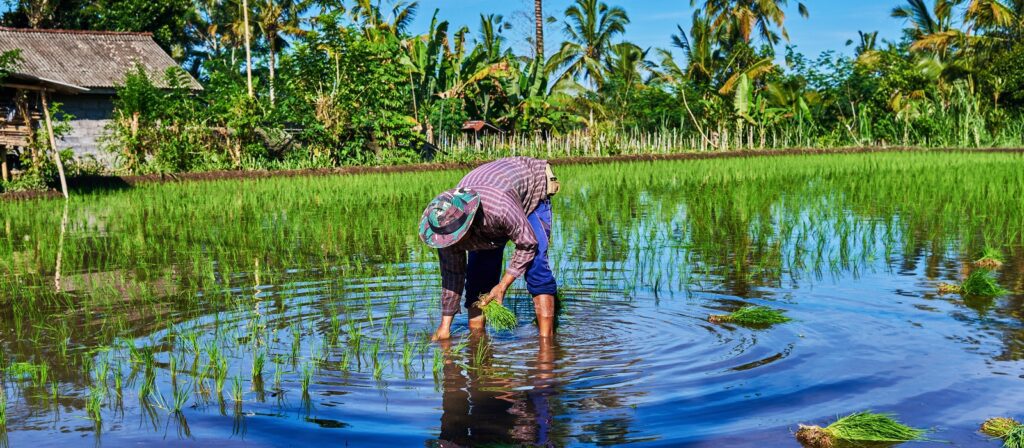
Specifically we feel the mutual micro-insurance model is very appropriate to help overcome some of these challenges. And what we find in many of these emerging markets is that the cooperative sector is firmly established in providing necessary services to low income and underserved communities. So you’ll find agricultural cooperatives, housing cooperatives, credit unions, all firmly established within these communities, providing them with necessary services, allowing insurance also to be distributed to these communities in a trusted and a community-owned way.
Communities are already very resilient and they are already undertaking and informal mutual risk pooling programmes, helping protecting each other. So the mutual concept is very familiar to these communities. Also, as mutuals, we have a bottom-up approach driven by the community’s needs, and we are completely inclusive and owned by the community. So that also builds that trust factor with these communities to let go of some of their disposable income towards paying for insurance and taking a long-term view in terms of continuing to buy the insurance products on a year-by-year basis and bringing the community together to achieve a common higher good is something that inspires them, something that motivates them. And it’s a self-regulating policy, which allows them to sort of make sure that the programme is being run in the right way and with the right fundamentals and utilising their own experiences in terms of how to deal with risk and taking a long-term approach in terms of addressing and supporting community resilience.
In addition, mutual micro-insurance also impacts sustainability and also provides climate resilience. And we’d like to point you to a report recently done by the Cambridge Institute, Sustainable Institute for Leadership. And this report looks at the operations of Card MBA, which is the largest mutual micro-insurance programme in the world, covering almost a quarter of the Philippine population, almost 25 million low-income people. And it has verified the impact of the mutual insurance programme on 10 of the sustainable development goals. And in particular, it analysed over a two-year period the impact of Card MBA to help people recover from Typhoon Haiyan, interviewing policyholders and seeing how, as we heard, that these organisations are the first responders on the ground when people need them the most. So we do have a very important role to play in terms of mutuals and protecting people at the times of need.
The foundation has been set up in 2015, and prior to that, ICMIF has been involved in providing support to the development of micro-insurance since the 1960s. We are a charitable organisation based in the UK. As we heard, our chair is Rob Wesseling, president and CEO of the Co-operators, and the remaining trustees are ICMIF members from emerging and developed countries. And our overall objective is to strengthen the resilience in underserved communities. Our approach is community-based. As mutuals, we focus on working with communities to understand their life and their livelihood risk. We try and help communities to understand how they can reduce their risk, prevent their risk, and look at alternative risk management strategies. So it’s not only about providing them with insurance products, but also looking at how other ways we can help them overcome the risk.
And then we try and engage them in terms of managing the risk through accessing affordable and appropriate micro-insurance products. And then finally, we provide them with technical support and financial support to scale up their programmes because as we all know, insurance is about numbers and the bigger the programme grows, the more chance we have of becoming sustainable as well as impactful for the communities we’re serving.
Our target population are those that are living between $2 and $10 a day. Below that, we are looking at people that really need government support and we reach ultimately those people that are most excluded. That includes women, small enterprises, small scale farmers, tribal communities, in essence, all of the hard to reach communities that are normally excluded from the mainstream financial services. And ultimately, our final aim is to establish sustainable, scalable, and impactful programmes who move from grant-dependency to self-sufficiency and are able to facilitate and drive their own growth going forward as shown by the graph here on the slide.
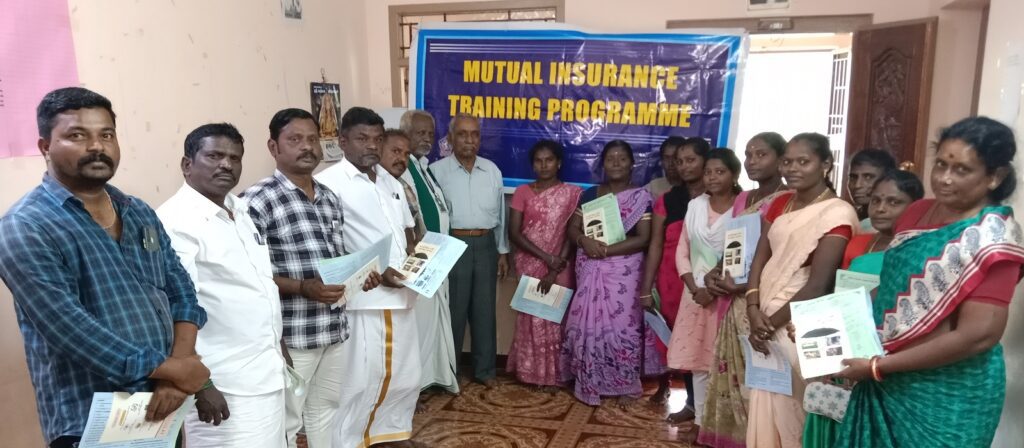
So far, since the foundation has been established over the last 10 years, we’ve managed to provide insurance to 3.5 million low-income households protecting almost 17 million lives. And we’ve been able to do this through the support of 42 ICMIF members. In addition, we’ve been providing technical assistance support by sending staff from ICMIF members from the North and from the South to help these organisations develop the infrastructure of their programmes.
And we’ve done this in a very lean way where we’ve tried to make sure that as much of the donations reach the ground. So ultimately, the cost of creating or enabling a policy to be issued is less than $1 in terms of donations. And this is really critical in terms of how we want to make sure most impact is being delivered to the ground.
Moving forward, our current initiative, so we have a programme with a partnership with the United Nations Development Programme, the Insurance Risk Finance Facility, and the ICMIF Foundation. And we have a matching arrangement where contributions from ICMIF members are matched by the UNDP IRFF. We provide funding of up to US $100,000 to each programme to scale up their micro-insurance programmes over a period of two years. And in addition to that, we provide them, most importantly, with access to technical assistance and expertise from our members in the South and also our members in the north. A maximum of four awards was made available in the first round and the projects launched in 2024.
So aligned with the objectives of the foundation, the IIC invest in engaging, educating, and empowering the communities to be able to understand and also access micro-insurance. And by providing the technical assistance, our focus is to help put the right fundamentals and infrastructure into place so that these programmes can then scale up their outreach and their impact, and ultimately to build resilience for women, small businesses and other underserved communities.
In terms of sustainability, as UNDP is the custodian of the United Nations sustainable development goals we’ve identified the following seven SDGs that we expect each of these programmes to have an impact upon. And each programme will be measured at the end of their project period regarding how well they have done in regards to achieving an impact on each of these sustainable development goals.
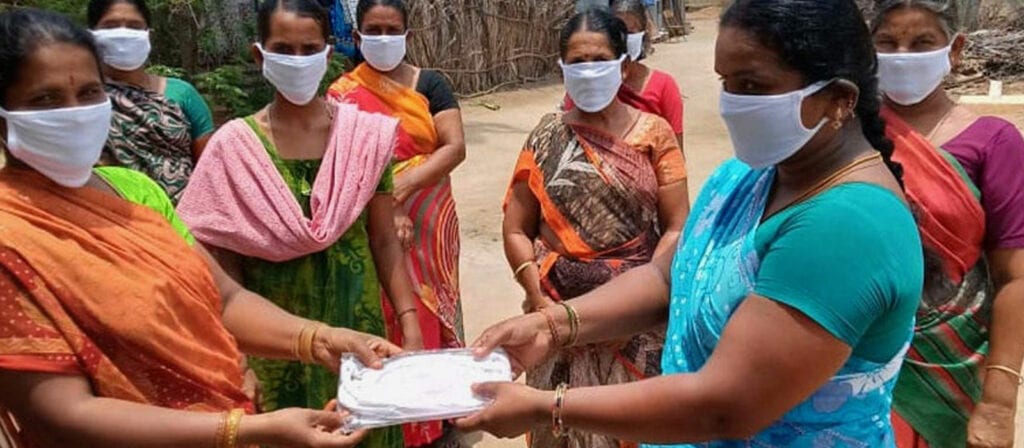
In terms of climate resilience, it’s well known that the climate impact is increasing and this is much more prevalent in emerging markets and more so on those communities that live in the high-risk areas in those markets as well. So the low income underserved hard to reach communities are most impacted by the effects of climate change and typically insurance penetration and means of protection and means of recovery is very limited for these communities. So all of our insurance products include the coverage for the impact of climate change to ensure that we can also provide some support to these communities when they’re faced with these natural disasters in parallel with other means of recovery that are being provided to them.
We also help them reach and access support services at these times of need. So it’s not only about giving them support through the micro-insurance programmes, but giving them access to government support at the same time as well. So that coupled together we can have a more of an impact in terms of their recovery from these. And we also help them build back better as well in terms of being more resilient in terms of future events that might happen as well.
And so for this first round that we launched, we have four projects, one in Kenya, one in Sri Lanka, one in Malawi, and one in the Philippines. These are pretty simple life and health products that we’re providing because we believe this is a starting part of the journey to help these people understand insurance, help them trust insurance, and then help build sustainable, scalable, and impactful insurance programmes. So all these four programmes have started last year and have received technical support and financial support over the last sort of one year of their programme.
As I mentioned, that the foundation is supported by ICMIF members and the IIC is also supported by ICMIF members including Co-operators and Gore Mutual. And this is really important specifically because the alignment in principles, as we heard, Gore mutual and cooperators, if you look back in the roots, they all started out to support and address an underserved and unserved need: communities coming together to help protect each other.
And this is similar to the situation faced by many of these communities that we’re working with as well. And cooperatives and mutuals also have a long-term approach. They understand what it takes to be a member-driven organisation and a member-driven programme. That type of patient-capital patient-investment is really important for the foundation so that the project partners can provide and deliver the services in the way they need to, which is right for the community. So there’s no pressure from the donor side in terms of doing it in a certain way or providing numbers or impact in a short amount of time.
It also provides a huge amount of motivation to those local mutuals to see the Big Brother mutuals, the ones that have reached success, reached the Holy Grail and become successful organisations, to have them reaching out and providing a supporting hand to them. And finally, also the technical know-how expertise and also the mentoring that’s available to these organisations is something unique that the foundation is able to provide through ICMIF members.
And as Shawna mentioned, there are ways that we are looking at in terms of how we can also bring value back to the ICMIF members that are supporting the foundation. And we’ve identified the following ways where we feel that there is a linkage to the local purpose that many of our ICMIF members are having in terms of their strategic and business opportunities and objectives. And some of these were already mentioned in terms of we are facilitating technical insights from the emerging markets back to the member donors. There’s a lot of innovations and a lot of expertise in emerging markets that we are trying to transfer across to our members in the North. It also helps in terms of strengthening and improving your DEI commitment and reinforcing your mutual differentiation, stepping up where others might not step up and helping communities where others may not be helping those communities.
And also we are providing staff engagement opportunities as well where staff members are able to interact and also even visit some of these organisations and understand their programmes, understand how mutuality works at a grassroot level, and also provides some support and technical know-how in the process as well.
And finally, the question that we always have is why have a global purpose when there is so many needs locally? And in essence, as we’ve already heard, we can’t work in isolation. What happens outside of our borders does have a ripple effect and affects everything we do and we have in our own lives and livelihoods as well. So it’s important that we recognise that and as mutuals, we don’t have borders in terms of our responsibility to communities. And definitely we’ve seen many of our ICMIF members stepping up and working together to try and solve the problem that many of these communities are working.
So that’s a short snapshot of our work at the moment. And for you as employees of these organisations, we’d love for you to get involved in our work and identify areas where potentially you might be interested to hear how emerging markets are dealing with, consider providing some of your time and technical expertise to the foundation. And of course follow us on LinkedIn. We have lots of policyholder stories, impact stories, on our YouTube channel as well. And of course support your organisation to support this initiative. Thanks very much.
Shawna Peddle:
Thank you, Sabbir. I’ve seen this presentation a few times now and it never ever stops impacting me personally. I think that if I were to bring it back to everybody in this room, please and ask you to drop any questions you might have for Sabbir or for Chantelle or for me into the chat. This work is so incredibly inspiring and I really like the CEO of one family saying that we are all one global family and I think that we forget that sometimes. And so when your head’s down and you’re doing your work, how does the work that you do connect back to the purpose of your organisation? How does it allow us as the citizenship people, as the social impact people, to be able to go out and make this kind of impact in far-flung places that we may not actually think about in our day-to-day?
So thank you Sabbir, and I am really excited to see how we can engage and consider these learnings in our own efforts to serve diverse communities in a Canadian context. And when Sabbir talks about how you can give back for your technical expertise, there are opportunities. We have one of our senior project managers here at Co-operators who’s been helping Sabbir and the foundation with the project management tools that are supporting these organisations and supporting these project partners and being able to deliver. So there are always opportunities for that. Unfortunately, you can’t always travel to these beautiful places, but even virtually, there’s so much that we can give back and we can help from Canada, which is appreciated, I’m sure, by Sabbir and by the project partners as well. So I’m going to come back to our poll from earlier. So Gina, could you pull it up again for me please? How are you feeling now?
That is an absolute mirror flip. We went from curious to inspired, so I think that we’ve done our jobs as your hosts and your speakers today. So thank you. I’m grateful. I’m actually really pleased by that. That means that you’ve been paying attention and that you’re opening up your minds to ways that we can do work a little bit differently outside of Canadian context.
So I feel that we’ve all been inspired by how our community support is local, it’s national, it’s international, and also why it’s so important for us to be active internationally, even in light of the significant needs happening here at home. And how sustainability is really holistic. It incorporates, of course, environmental, social, economic elements, but it also has a long-term view. And that comes back to something that Sabbir mentioned, that this is not just about, well, you have to get back to us with your results in a year. This is about building community and building resilience in those communities. And that takes time and it takes effort and it takes care. And so having that more holistic long-term view is really at the basis of sustainability and impact as well.
So we spent our time together learning about the unique partnership between Gore Mutual and Co-operators, ICMIF’s Insurance Innovation Challenge and the ways collaboration and cooperation are leading to insurance solutions that can foster community resilience. We’ll now jump into that Q&A, I’ll start with anything in the chat, but we’re also open to you raising your hand and we can take you off mute and you can ask it if you feel more comfortable with that as well.
I have one question. Thank you, Jessica Fisher. How does Co-operators and Gore determine how much of its community investment budget goes towards international initiatives like ICMOF Foundation versus Canadian ones? And Chantelle, I’ll let you answer that question and then I’ll follow up.
Chantelle Moore:
Thanks Shawna, and thanks Jess. So for Gore Mutual, predominantly our granting is within the communities that our customers, our employees and broker partners live and work. And that is across Canada. So if you look at our 2024 granting, 99% of our granting was given right here in Canada. And ICMIF Foundation was one of those unique opportunities for us to really understand that piece of healing and support and climate resilience has no borders. And so this is really an opportunity for us to do something that isn’t of our normal, but we do feel so deeply connected not only because of our employees and their roots, but because of the connection to ICMIF and standing alongside others. So yeah, I would say it’s predominantly here in Canada and this is our first leap into international granting.
Shawna Peddle:
Our story of Co-operators is similar but a little bit different. So like Gore, the vast majority of our impact, the community initiatives that we invest in, are within Canada for the same reasons. It’s where we work, we live, we play, it’s where our clients are and the communities that we serve. So our purpose is financial security for Canadians and their communities. Our work with ICMIF allows us to expand on our definition of communities. So how can we think about what our clients, where their communities are? Where our employee’s communities are? This is not a geographic boundary when we talk about community, it’s where’s your heart? Where’s your home? Where are your people? And so it allows us to be able to expand out a little bit. And we have two international partnerships.
The year that we made the investment into the ICMIF Foundation, it was about 10% of our community giving. The other partner that we have is the Co-operative Development Foundation of Canada. And so our partnership with ICMIF allows us to be able to do work with another within the mutual and the cooperative insurance space. So as our business, as an insurer. Our partnership is much smaller with the Co-operative Development Foundation of Canada, but that allows us to be able to support the work internationally of fellow cooperatives.
So it’s the two sides of us. This one is around insurance and the business, and the other one is around cooperation. So we don’t have a set formula for how much we’re going to do internationally. It’s really where our heart pulls us. And ICMIF has been a partner of ours for so many years and the foundation has been work that we’ve supported for so many years, that when they came to us and asked Rob Wesseling to be able to support this work, he did it easily and gratefully and, I think, quite quickly to be able to ask us to be able to make an investment on behalf of Co-operators.
So I have another couple of questions. Sabbir, could you please expand on what technical assistance is provided to the members in these communities?
Sabbir Patel:
Sure. So there’s a range of expertise that we provide depending on the needs of these organisations. So depending on what stage of development they are in, in essence, we have a number of members in the South who have successfully established their micro-insurance programmes and they provide strategic advice to these organisations in terms of how to set up, how to have the right strategy, how to deal with the communities, how to make sure they have the right infrastructure in place to build up their programmes for the long term. And then there’s also training that’s provided by these organisations in terms of how to make sure they have the right staff in place to deliver on these programmes and build up a community infrastructure to carry it forward.
And then from the organisations and the ICMIF members from the North, it’s very much focused around technical support. So it could be actuarial analysis, it could be training on certain insurance principles, it could be on software. It could be a wide range depending on the actual organisation that we are supporting and what their needs are.
Shawna Peddle:
Thanks Sabbir. I have one question from Erin. Hi Erin. “This is all compelling work and excellent to hear.” Thank you. “In these increasingly tough economic times, we’re seeing some credit unions and co-ops struggle to maintain their foundation work and charitable giving, regrettably. How do you make the case to maintain this important work? And thank you for doing so.” Erin, I so appreciate your question. I’ll put it to Chantelle first.
Chantelle Moore:
Thank you for that thoughtful question. And it is, we’re in really interesting times. We have large geopolitical factors facing us. We have climate-related factors, financial security factors, and our charitable sector is stretched like never before. So right now, the case for Gore Mutual is the standing on our values of who we are and what we’ve always been. For our team here at Gore Mutual, it is an opportunity for us to dive in and lean in even further. Like I said, through all the obstacles and adversity that we’ve faced over 185 years, we haven’t backed down yet and we are not planning to back down anytime soon. So I find that adversity really fuels our drive forward. I find that competition is a mindset. And so when you align with others like Co-operators, when you work together, you show your strength in numbers. And if enough of us are standing side by side, it’s a lot harder to push us down.
So I really would say that working for an organisation like Gore Mutual or the Co-operators, you’re standing on the longevity of values and the fortitude to keep going even when times are tough. So I would say choose your organisation wisely, and I’m so glad that I made this choice myself. Shawna, any other marks on that?
Shawna Peddle:
So I said at the beginning of this conversation how much Chantelle and I sometimes feel like we’re on the same team, and we are. It is just that we have different paychecks. Really that’s what it comes down to. We have different things on our business cards. I think that you mentioned, Erin, about making the case. And I don’t ever on any single day feel like I need to make the case for maintaining this work at Co-operators. We get to see people who are in our roles and other organisations who are losing budgets, who are losing staffing, who are losing focus. And we have a CEO who has done nothing but double down. In the past month he has issued we are not turning away on our DEI commitments. We are not turning away on our sustainability and net-zero commitments. We’re actually going to go harder into these things.
And so to echo completely what you said, Chantelle, this is the best time to work for a co-op or a mutual. Please everybody, if you take nothing more away from what we’ve talked about today, understand that you work in a place with a gigantic heart. That we have to do well. We have to do well as a business, but that allows us to do well in our communities. And we have the grace at Co-operators of having a formula that funds our community giving year-over-year, that’s based on our net income of the past few years.
So yes, there is certain craziness and a roller coaster right now that we’re all riding, but we are very confident in our ability to be able to keep these partnerships going. And because we have that stability, it allows us to be stable for our partners. So there’s so many community organisations across the country and internationally that right now are suffering because a lot of companies are pulling out. We don’t pull out, we double down.
And so we’re going to them now and saying, “Okay, are there ways that we can support you because you’ve lost other funders?” And that I think is our cooperative values at work right there, that we are here because we’re concerned for communities because we’re based in communities. We were born out of community as Co-operators. We were a bunch of farmers who came together because they couldn’t afford insurance. So they decided to make their own. So that real embedment in our local communities is what drives the work that we do.
So Erin, to answer your question, we have a very supportive senior leadership team and board that never asks us to do anything different and supports and encourages us to go as far as we can with our friends and our partners like we’re on the call today.
So the evaluation form, we keep reminding ourselves of that. Thank you very much. And Erin, your last comment that leadership matters, we need to send you folks and Sabbir on a roadshow to inspire and educate others. For anybody who doesn’t know Erin, who’s on the call, she works at St. Mary’s University, and she leads programmes that are training our next generation of Co-operative leaders. So Erin, it is not just about us. It is about you. Let’s keep talking about co-ops. Let’s keep talking about how we can support our employees and young leaders across the sector to really dig in to those co-op trainings and really start to feel this. Because again, as I mentioned at the beginning, it’s not just about where you work. You work in a place that’s very values-driven, everyone on this call, and that is how we all show up every day.
So thank you for your time. If there are no other questions, I think I can ask you to keep your eye out for an email following this session. That email will come from ICMIF and it will have the links to some of the information we’ve talked about today. It will have a link to this recording, the evaluation form, and is just our thank you for your time and your energy and your patience. I think we only lost a couple of people, which after an hour session is really gratifying. So thank you all. Thank you to Chantelle. Thank you to Sabbir. In our last couple of seconds. If there’s anything else that you two want to jump in and to add, but otherwise I will say a happy thank you and have a great afternoon everybody.