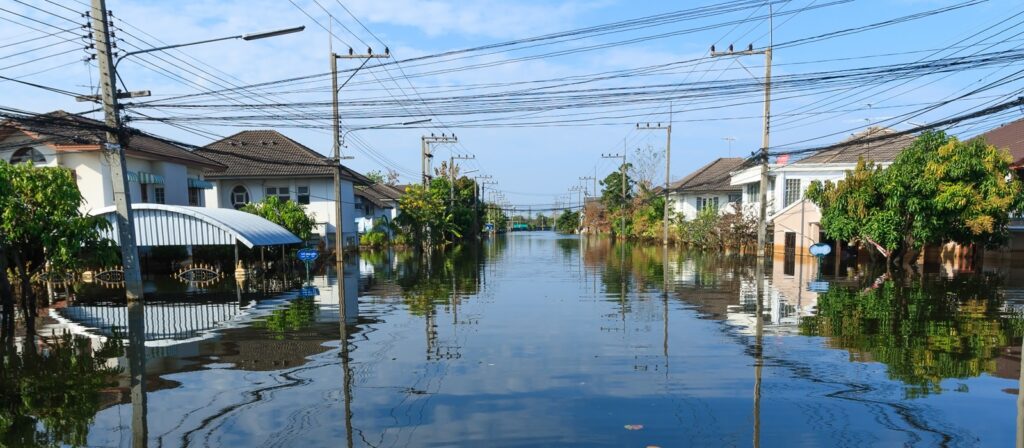

Climate change is no longer a distant or abstract threat; it is a pressing reality reshaping risks across all sectors, regions, and communities worldwide. At COP30 in Belém (Brazil), the report Resilience Now[1], co-presented by Marsh McLennan and the Inter-American Development Bank highlighted the staggering scale of climate-related damages: in Latin America and the Caribbean alone, climate-related losses are currently estimated at USD 1.2 million every hour, much of it uninsured. Globally, only about 43% of weather-related damages are insured, leaving a protection gap of roughly USD 132 billion annually. This gap exposes communities, governments, and businesses to severe financial shocks and underscores the urgent need for resilience solutions, including effective risk transfer mechanisms.
For mutual and cooperative insurers, this represents both a challenge and an opportunity to deepen their commitment to member protection and community resilience. Adaptation is not a charitable gesture; it is a vital investment in economic stability and sustainable growth that aligns closely with the mutual model’s long-term stewardship.
The strategic role of insurance and the “House of Insurance” at COP30
The climate challenge is vast and multifaceted, requiring diverse solutions. Insurance is a critical part of this response, yet barriers remain – such as limited awareness of innovative products, data gaps, and in some regions, insufficient demand and supply.
These are not new issues, but what has changed is the urgency: the question is not if climate change will impact us, but how we can collectively manage these risks and support the transformation needed. The answer lies in innovation. While adapting insurance to climate realities is complex, COP30 showcased promising solutions that mutual insurers can champion.
A significant development at COP30 was the creation of the “House of Insurance,” a platform organised by the Brazilian insurance association CNSeg in partnership with Marsh McLennan and others. This initiative brought together insurers, governments, businesses, and NGOs to explore how the insurance industry is innovating to support the transition to a low-emission, resilient economy. At its core was the message that insurance is more than a mechanism for compensating losses – it is a strategic tool for building resilience and enabling sustainable development within communities.
What does this mean in practice?
Insurance is a critical pillar of resilience, but barriers persist – data gaps, limited awareness, and uneven supply and demand. Yet, the urgency of climate risk is driving creative responses, many of which were showcased during COP30:
- Smarter risk analytics: Understanding hazards and vulnerabilities is improving, but gaps remain. Risk models and analytical tools have advanced significantly, though development and implementation often require time and investment. Guy Carpenter’s launch of a new flood model for Brazil highlights how better data can transform underwriting and empower communities to manage risks. For many regions, however, good data and models are still a challenge. Marsh McLennan’s work with the Insurance Development Forum and the Global Risk Modelling Alliance (GRMA) aims to improve global understanding and quantification of natural hazards and disaster risk. The collective work across insurance industry partners builds efficiency and reduces costs in the risk modeling ecosystem.
- Addressing local government risk and supporting city-level resilience: Cities generate approximately 80% of global GDP and concentrate systemic risks, making them critical arenas for climate adaptation. COP30 discussions highlighted the need for coordinated action between public and private sectors to address challenges such as flooding, drought, and political instability. Innovative Community Based Catastrophe Insurance Programmes (CBCI) and Marsh McLennan’s work with ICLEI (Local Governments for Sustainability) demonstrate how analytics can go beyond insurance to inform urban planning and resilience strategies. For mutual and cooperative insurers, whose roots often lie in local communities, there is a unique opportunity to collaborate with city governments and other stakeholders.
- Resilience-linked products: Embedding resilience into underwriting and investment processes remains far from common practice, but products are emerging that not only cover damages but also proactively mitigate risks and mobilise capital for sustainable projects. One very promising example is the Cape Lookout Resilience Catastrophe Bond placed by GC Securities for the North Carolina Underwriting Association. It links storm-resistant construction with financial markets and exemplifies how insurance can incentivise resilience investments rather than just pay for recovery. Initiatives like Flood Performance Certificates and Property Flood Resilience scoring aim to create consistent standards for resilience measures, enabling risk-based premium discounts and better communication of property risks. Mutual insurers can leverage their trusted relationships to promote these tools and support members in enhancing resilience.
- Public-Private Insurance Partnerships (PPIPs) with resilience built in: Protection gaps are high, but collaborative risk-sharing mechanisms are evolving. The reinsurance market’s growing role as a private partner for public sector risk transfer is notable. Many governments have expanded the remit of existing schemes (such as Australia), introduced new legislation (such as Italy), or are looking to establish new PPIPs (such as Germany) to expand access to climate-related disaster insurance and incentivise resilience investments. Indicatively, Elementar Re, the national scheme recently proposed by the German Insurance Association, enshrines prevention measures, mandatory risk assessments, and transparency into its operational design – principles that resonate with mutual insurers’ ethos of member protection.
- Build back better: The UK’s Flood Re initiative demonstrates how claims processes can drive resilience by encouraging rebuilding to higher standards. For mutual and cooperative insurers, this approach offers a model for how claims processes can be leveraged to promote stronger, more resilient communities. By encouraging rebuilding standards that reduce vulnerability, mutual insurers can help protect their members from repeated losses and contribute to long-term sustainability.
- Aligning environmental and community resilience: Nature-based solutions are increasingly recognised as cost-effective and impactful approaches to managing physical climate risks, as demonstrated in Marsh McLennan’s webinar on this topic during New York Climate Action Week, and our engagement with the NATURANCE initiative. These solutions can be about 50% more cost-effective than traditional infrastructure, but implementation is still challenging. Collaborations with organisations such as The Nature Conservancy have demonstrated the potential of nature-based approaches to reduce wildfire and flood risks. Our report Rooted in Resilience[2] highlights how risk transfer solutions can incentivise investments in nature restoration, supported by insurance products that de-risk these investments and attract private capital. Standardised methods and robust data are essential to quantify benefits and mobilise investment, and mutual insurers can contribute by advocating for and participating in these emerging frameworks.
Looking ahead
The insurance industry is at a crossroads. The traditional role of insurers as payers of claims is evolving toward a more proactive role as architects of resilience. COP30 demonstrated that the sector is ready to embrace this transformation – not out of altruism, but because resilience is becoming a competitive advantage and a necessity for sustainable business. However, despite progress, several questions remain:
- Are current insurance products sufficiently tailored to address climate risks and residual damages faced by insureds?
- How effectively are investors, project developers, and planners integrating insurance into their decision-making?
By embracing innovation and collaboration, mutual insurers and their brokers can lead the way in building a more resilient future – one that protects members, supports sustainable development, and addresses the complex challenges posed by climate change. This transformation will require ambition, endurance, and partnership across sectors, but it also offers an opportunity for mutual and cooperative insurers to reaffirm their unique role as trusted stewards of resilience in a changing world.
[1]Resilience Now (2025) available at: https://publications.iadb.org/en/publications/english/viewer/Resilience-Now-Closing-the-Adaptation-Gap-in-Latin-America-and-the-Caribbean-LAC.pdf
[2] Marsh McLennan (2023): Rooted in Resilience, available at https://www.marshmclennan.com/insights/publications/2023/may/rooted-in-resilience-innovations-in-nature-insurance-for-business.html