This transcript was generated using automated transcription. While efforts have been made to ensure accuracy, some errors or inaccuracies may remain.
Liz Green:
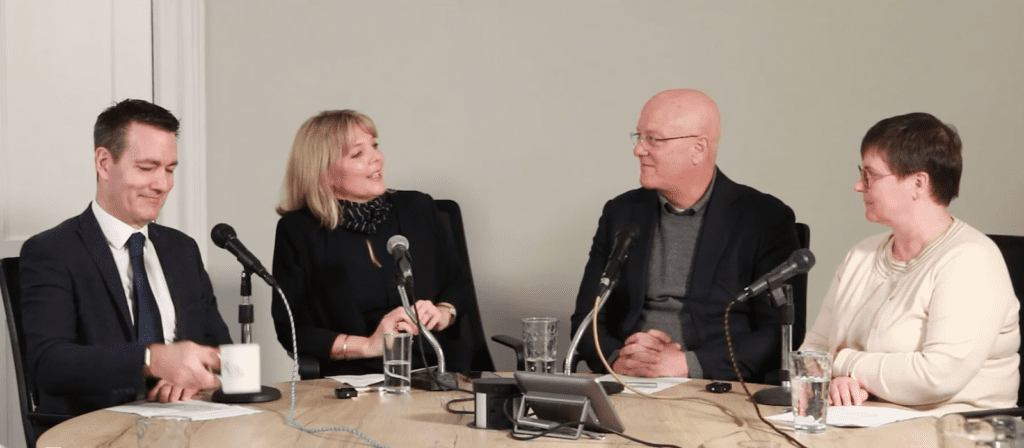
Wonderful to have my fantastic panellists here with me today on what is the sixth Mutual Leaders Insights webinar. This is a series that features discussions with amazing CEOs from all over the world from the mutual and cooperative insurance sector. Including today’s panellists, I’ve actually moderated conversations now with 18 different leaders in 15 organisations, and have to tell you everyone is unique and everyone is such a pleasure, so I’m really looking forward to this.
In this webinar, what are we going to be looking at? Well, we are going to be looking at a number of strategic topics which are top of mind for our CEOs. As you all know, I speak to a CEO at least once a day from our network, really trying to understand what’s on your mind and there’s some key areas at the moment which are really on your mind. There’s a lot of talk at the moment about leveraging mutuality within this very complex environment of growth at the moment, so we’ll be exploring a bit about that. The leadership challenges around what you are facing at the moment within this complexity, that’s a really big topic as well. How do we lead through growth and how are organisations adapting? And then really beyond that, we’re also going to be having a bit of a look about how ICMIF is serving you as your organisations and what we can learn from that. So, let me introduce my wonderful panel. First of all, we have John Kearns, who is the chief executive officer of IPB Insurance in Ireland. Welcome, John.
John Kearns:
Thank you. Great to be here.
Liz Green:
Lovely to see you. We also have Noel Raboy who is the president and CEO of CLIMBS in the Philippines. Lovely to see you again, Noel.
Noel Raboy:
Thank you, Alice. Thank you for being part of this webinar. It’s a great pleasure. I’m privileged.
Liz Green:
Wonderful. So good to have you. Again, it’s so lovely again to see our fantastic Andy Morris. He’s a chief executive officer of Cirencester Friendly in the UK. Welcome, Andy.
Andy Morris:
Thank you very much. Liz, and it’s a pleasure to be here. Looking forward to the conversation.
Liz Green:
Fantastic. So are we. Let’s get straight into it. Okay. To get our feet wet, let’s just start with asking each of you to introduce your organisations and possibly just say a few words about your affinity groups and the main strategic issues that you facing at the moment. Can we start with Andy, perhaps? Andy, kick us off.
Andy Morris:
Sure. Thanks very much and hi to everybody. I’m chief exec of Cirencester Friendly Society. We are a specialist income protection provider serving the UK. So, whilst we are a top 10 income protection provider, we are a monoline insurer. So in that sense, there’s only about 100 of us, about 150 million of assets. So in that sense, we don’t compete so much with the bigger ones, but we do… When the big boys can’t look after people, we then do a specialist offering to look after the sort of more complex cases, be that irregular income, be that pre-existing medical conditions, those people that might need a bit more attention, a bit more care. We have an in-house underwriting, in-house claims, do all of that processing. So that’s where we sit in the market and just serve only the UK. We don’t have affinity groups as such. We do whole of market and we sell through intermediaries in terms of our distribution network. We are based in the Cotswolds, which for those of you who know the UK this year, I think it’s about the first sunny day we’ve had this year.
Liz Green:
You’re based in such a beautiful part of Britain I have to say as well. Yeah, it is wonderful. Thank you so much, Andy. That was a great introduction to your organisation and perhaps then we’ll pass across to you, Noel.
Noel Raboy:
Thank you, Liz. I’m Noel Raboy. I’ve been with the organisation for more than 20 years, the third president, CEO of CLIMBS situated in the Philippines, southern part. That is one hour flight from centre of Metro Manila. CLIMBS Life and General Insurance Cooperative is a composite insurance. We are happy, glad in the Philippines that the Insurance Commission, our regulator, allows us to have one company. At the same time, we have a life managerial insurance. It’s really a homegrown organised by co-op leaders before in 1971. We have around more than 4,000 cooperative members integrating this one into a federation of insurance. We have also some allied programmes and services to support our cooperatives. We have a mutual asset management corporations. We have also mutual fund. We have also pre-need and we have supported the college. We have the advocacy. Likewise, we ensure of more than 12 million Filipinos impacting around 36 million Filipinos right now in the Philippines.
Considering also that Philippines situated in the heart of these typhoons and other calamities, so CLIMBS transition to become a climate insurance provider with its noble product. We use also the technology, our parametric insurance to support our farmers and going towards the micro, small and medium enterprises to support their insurance requirement. Likewise, we work also with a lot of organisations within the Philippines and using cooperative model, how we can be impactful and we always see to it that nobody will be left behind. So with the sole objective of our programme is to the climate change-related effects so that adversely impact the lives of the Filipinos and their livelihood and resilience. We look-forward the future as our strategic priorities are centred on balancing the technology, advancement with our core cooperative values. Thank you, Liz.
Liz Green:
Just such an incredible organisation. I think our viewers are going to be in for a real treat hearing all about the work that you do in CLIMBS. I know every time we get together I’m just blown away by the impact that you have. So if we could take ourselves away from the beautiful CLIMBS area and Philippines, we’re now going into equally beautiful territory over in Ireland. John, tell us a bit about your organisation. I know it, again, it’s another fascinating model.
John Kearns:
Sure. IPB stands for Irish Public Bodies. This year we’re celebrating our 100th year, our centenary. We were founded in September 1926. So we have a fun year of centenary celebrations culminating with a people event and a member event in September to formally recognise that 100 years. Not a lot of companies survive 100 years. We’re pleased to be able to say that we’re in great financial position. The focus of me, the leadership team and the board, is to ensure that we’re around for the next 100 years. So, great milestone for the organisation.
We are one of the only mutual insurers in Ireland. There isn’t really a tradition history of mutuality. We are essentially owned… Our members, as our name suggests, are essentially the local authorities in Ireland. So there’s 31 local authorities. There’s some education training boards and some other entities that qualify as public authority. So we actually have 55 or so members and they are the ones that are entitled to share in our profits and receive an annual dividend. We also offer insurance to non-members and that really defines our strategic focus in Ireland. We offer property casualty coverages, essentially commercial coverage to those members. We write about 200 million euro, I guess what that’s what? 235 or so million US dollars current exchange rate. Of that 200 million euro, our members pay about 140 million. So they’re about 70, 75% of our premium and they’re the ones that essentially share in the distribution of profits.
Our strategic focus is to be the insurer of all commercial exposures for those members and to generate great service and generate relatively cheap insurance and generate a return and use our fixed assets essentially in our capability in the insurance space to ensure non-members and generate a return on those members, which then flows generate a return from the non-members, which then flows to our membership base. The reason we look beyond our membership base is that with inflation and increasing regulation and indeed reducing insurance premiums in the liability space where we not to be involved outside of our membership base, we would have a serious strategic challenge in that our expense ratio would be increasing maybe even exponentially and would force us to have to charge our members a lot more for their insurance.
So the strategic opportunity, I guess, for IPB is to use all our fixed resources and expertise and capability to operate in the non-member space and generate a return for our members so that we can offer them the best possible insurance equation paradigm, pricing and service and ensure that long-term sustainability and back to the point that we’re here in the next hundred years.
Liz Green:
Amazing. By the way, happy, happy anniversary on the hundred, on your centenary. It is such an incredible milestone and a wonderful organisation. I look forward to being over later this year to celebrate with you because it really is a milestone.
John Kearns:
Just to be clear, I wasn’t here at the beginning. So just you know, [inaudible 00:11:24].
Liz Green:
You’re looking good on it if you were. But yeah, it is a super… And three really, really different mutual models with three exceptional leaders, all of whom despite the fact that your three very, very different organisations, all of you have some very similar challenges which I’d really like to explore. The word leadership is so crucial, isn’t it, at the moment? I mean, navigating our way through water is a very, very different world and it takes a really certain type of leadership.
So, I’d like to spend a bit of time with the three of you looking at what your leadership challenges are and how you’re getting ready for this rather uncertain future which has opportunities, as well as obviously weaknesses and challenges, but perhaps if I start with looking at what the biggest challenges you feel as a leader at the moment are and how you’re addressing those. Perhaps if we start there with Noel. Noel, you have such a set of challenges on so many levels and I’ve never met anybody who is as visible a leader as Noel. He is somebody who is constantly out there pushing the leadership message, making sure he’s very, very visible with his people and focused on making sure that you are learning before you lead. So over to you, Noel. Do tell us a bit about how you manage this complex challenge.
Noel Raboy:
Thank you, Liz. We all know that Philippines, as I said, being one of the most disaster-prone countries in the world and we have 24 typhoons every year and four to five of that is very devastating with severity also increasing every year. The climate change is our most urgent risk. That includes also the re-insurance premium, how we manage the portfolio and the renewal. So you can see how we can look into the predictions and science on how to mitigate our exposure, but this strategic goal is to move beyond a simple protection towards prevention. It is also that we started on for our cooperatives to be more knowledgeable on the specific risk and managing how to make it understand on the placement, and on that prevention side is expanding towards… One of that is education and renewable energy initiatives. We are actively supporting cooperatives in transitioning to solar green energy to build the long-term economic and environmental sustainability.
In related also with the climate change, we developed also some products, as I said, on the parametric insurance to make sure properly that we can pay claims on the right time within 10 working days and the claims will be directly given as we are the micro insurance provider in the Philippines. It needs also to align on the technological advancement. This is how we come up with partnership. We are very grateful with ICMIF, that ICMIF able to connect us with BRS, that is Cera co-ops in Belgium that developed a programme to support us on our digital transformation. Also, to that is one of the challenges also is the involvement of youth. Even though the Philippines is in the sweet spot population, but the cooperative membership creates a lot of involvement to the youth and it is where educations will come in that involvement to the cooperative is not only about membership, but the same time on its values and purpose-driven why I will join the cooperative, but it’s where our strength that we can ensure a lot of Filipinos.
Another thing also is the inclusive governance. That’s the good thing for become a cooperative or a mutuals, but the demand also on serving our owners at the same time, our policyholders is very challenging considering some alignments of claims lists. They expect a lot of the premiums to be going down, but they want a higher benefit of the coverage. In terms of claims, you have to maximise also those who are supposed to be not payable, but they demand that “we are owners”. So sometimes it is a leverage become as a cooperative members, insurance cooperative members of clients, but likewise it also our strength that we will tell them that at the end of the day if we have some surplus in terms of our operations, we will give it back to the community, the cooperative movements. So that’s one of the other challenges.
Then on the other side also, because advocacy is one of the main programmes of clients, so aside from the competition, there’s a lot of private companies right now who are into the cooperative movement. So the pricing is very thin in terms of the net of the rates and it is where the advocacy will come in that the telling really our cooperative members on why we joined cooperatives not just as an insurance partner or owners, but likewise helping communities along the way. Thank you, Liz, for sharing on a lot of challenges in the Philippines.
Liz Green:
It’s fascinating. I mean, there’s so much to unpack then and I’m curious from John and Andy’s perspective, do any of those leadership challenges that Noel has shared with that, did any of those chime to something similar or lateral that you are dealing with?
Andy Morris:
If I chip in, I think the mutual agenda is clearly key there and I think from what I’m aware of in Asia, it’s less embedded and therefore, getting that message out there must be a challenge, and I pick up on that in terms of the UK. So I chair the Association of Financial Mutuals, which is the trade body for insurers in the UK. Unlike a number of our European colleagues and indeed American colleagues, the mutuality has gone a bit off the radar in the UK. So I think, Noel, where you were talking about needing to build up that awareness and serve those members, I guess we have an opposite problem that we had a long history of mutuality that disappeared somewhat, and therefore, rebuilding awareness, getting people to know how a mutual works, get that message out there, as well as selling a competitive product, I think, is part of the challenge and that’s across our market of getting people more aware of that.
If I was to pick that up in terms of to your point, Liz, at the start around challenges but also they become opportunities, the current government in the UK has made a public declaration of trying to double the size of the mutual sector across the economy and that includes financial services, so in that context, trying to see how we get that awareness out there for mutuality and how we deal with that challenge of growth, which is a particular issue in the UK at present. Mutuals doing their bit, but also trying to punch above their weight in terms of growing the mutual sector within the whole of the UK economy is a particular challenge. The fact that the government has made that statement of doubling is something we can hang our hat on.
It was put in our strategy when I became CEO actually to try and double the size of the organisation. I’d like to claim we got there first, but I’m quite happy to go on the coattails of the organisations across the country that are looking to do that. Look to our other colleagues around the globe as to good ways of achieving that and getting that mutual message across is one of the key reasons why we are joining ICMIF or have joined ICMIF and as one of the newest members thereof, so thank you very much for that because we actually met on that very topic, Liz, at the AFM conference. Yeah.
Liz Green:
We did indeed.
Andy Morris:
Thank you for that.
Liz Green:
Yeah. I mean, you are absolutely right, Andy. I think any strategic challenge or opportunity from a leadership perspective that’s tied to government policy is a huge, huge challenge because obviously as we all know, as much as we’d like to appreciate all the hard work that our governments and the leaders there do, it’s shifting sands and it is very, very difficult for us to be able to make the progress in the way that we’d like to, but that doesn’t mean that we shouldn’t go for it. I like to say, and as I said at the AFM conference, it is about the more we can collaborate and we can join our voices together to create more momentum because together we are definitely stronger. We can start to look at really, really stronger business cases and political cases as well for growing the mutual sector and getting rid of those unintended consequences of some of the existing policy. But obviously, John, you are over there in Ireland, you are probably facing similar, I’d imagine, opportunities or challenges to ensure that you can operate within a thriving context at IPB.
John Kearns:
Yeah. It is fascinating because unlike what we’ve heard from the other two speakers, I think as I indicated at the outset, there is no history of mutuality in Ireland, maybe to an extent in banking and that was not positive with the crash 15 years ago. A lot of the mutuals on the banking side where the leaders in pro-governance and all that related stuff. In the insurance space, there isn’t anybody else. There’s somebody on the life insurance side, a small entity, but that’s it. So we don’t have anything like the preponderance of mutual entities in the insurance space, and as a consequence, we’re not really understood and there isn’t really clarity, and then aligned that to the fact that we’re very focused on a very specialised set of members.
Our challenge is as we look to grow outside of our members, who are IPB and why should we ensure with them? We ourselves haven’t helped that because for very good reasons in our history, in our more recent history, we have kept a low profile with a lot of the liability insurance challenges in Ireland, the difficulty getting insurance because of the very plaintiff-friendly legal environment. The cycle of hard markets has resulted in lots of entities not being able to get insurance. They go to government and say, “I can’t get insurance,” and government is looking for solutions and typically say, “Oh, yeah, there’s this mutual company that we sort of own-ish through our local authorities and let’s get them to be the insurer of last resort.” As a consequence, we didn’t really want to have a public profile and be forced into that position.
In other word, it has changed. The liability environment is a lot more favourable here. There’s been dramatic changes driven by government over the last 10 years. It’s way more favourable in environment, and as a consequence it’s much easier to get insurance. So in that commercial space, we compete with all of the global insurers that you’ll all be familiar with in the property casualty space. Our strategic challenge now is to compete with them and persuade our target market that IPB is a viable alternative. Now, we’re not out there in the whole universe of opportunity. We have aligned our growth strategy around our members’ mission. So again, going back to our members, our local authorities and school educational bodies, we have defined our appetite as being in the education, religious, healthcare community and not-for-profit state, semi-state space.
We’re not interested in a commercial, so construction, manufacturing, hospitality, none of that. We have zero appetite in that space. So we just want to write entities that are consistent and aligned with the mission of our members, which is a social mandate. Essentially, our strapline is we insure Ireland. So it’s not only are we a mutual which has a nobility around it, but then in the mutual space we only insure entities that essentially are at a social service and enhance, I guess, the life of the citizens of the country in the non-profit social space.
Surprisingly, you’d think there’d be people running toward our doorstep with that element of nobility, but I guess this insurance is not necessarily widely understood in those target areas and a lot of our opportunities have been insured with the traditional insurance market for a long, long time. Our strategic challenge having been as to say, keeping our head below the power path for a lot of that 100 years has now been to turn that paradigm around and to get ourselves out there, albeit just in that target space. In many ways, it’s a fun challenge. It’s a very achievable opportunity and we get there and we’re not necessarily pressured to get there in 12 months or 24 months. We just started this strategy three and a half years ago and we’re on the second. We had strategy 26, which we’ve now really got to the end of and we’re now embracing on strategy 29 and that we’ll see I think a material evolution into that space.
Going back to a point Noel made about what are the other strategic challenges? Clearly, in the insurance space nowadays climate change is front and centre. Fortunately, Ireland gets occasional rain. Apparently, it’s rained every day for the last 400 days or something like that. You wouldn’t believe the… Noel, I get the typhoons, but as I say, every couple of weeks there’s a town in Ireland that’s underwater because the river has burst its banks and there’s nowhere for it to go. Developers insist on building new developments in floodplains. So you can’t make this up. Flood insurance is part of the insurance policy in Ireland unlike other countries where it’s carved out. The reality is because of that is a lot of locations become uninsurable and it’s a major problem for government.
Government has asked us and others to get involved in coming up with a solution. There’s flooding in the UK. There’s various flood pools in the US. I mean, there’s models all around the world. We don’t have one in Ireland. So what happens when a town gets flooded is everybody goes running to government saying, “I need to be compensated for the damage to my property,” and government is rightly saying, “This is an insurance problem.” It’s not rocket science, but the problem is it’s not getting any better. It’s obviously getting worse with climate change and more severe weather, and we need to be front and centre in helping government come up with a solution to the flood problem in Ireland.
Liz Green:
Absolutely. It’s interesting. I’m sure the government, the Irish government is aware of flood rate and what we’ve done in the UK, but also other opportunities all over the world where we’ve got similar setups. But it’s great, isn’t it? It’s great, John, that you do stand out as an organisation. You have your mutual difference which you’re starting to leverage. How does that mutual difference actually manifest in terms of your member engagement? What sort of tools are you using? Because you’ve got that wonderful retention rate.
John Kearns:
Right. Yeah. So, it would be an international incident if we lost a member. We have our 55 members. So our member retention is 100% and it’s all direct. We don’t distribute. We don’t write our member business through brokers or agents and other than there’s one exception to that, but we won’t get into that minor exception. To your point, service is huge and we have a member and client relations team that really their whole focus is on managing that relationship and it’s phenomenal. We get plus 90, 95% satisfaction scores every year from those local authority and education training board members in the context of the service we provide. All of the senior people have all of our cell phone numbers. There’s calls coming out anytime of the day and night.
You can imagine a local authority has a multi-faceted range of issues, insurance-related issues that they face, but they have access to, as I say, a whole team of people here, that sole mission is to solve their problems. We have a big loss control risk management team that proactively engages with our members on relevant topics and again will be inconceivable if somebody were to say, “We got to go to a broker because we’re not happy with the service that IPB provides.” It’s a core strength that we have.
Non-members, we essentially write through brokers. So we have a broker channel and we have arrangements and engagements with all the key brokers, agents that operate in Ireland, which are international agents and brokers. Again, we have really good relationship with them and everybody knows their lanes and sticks to the lanes. In our non-member business, we probably have retention in the high nineties and 95 and above. So, it’s services. Because we are so focused on service for our members, that flow suits the non-members. Again, we don’t envisage in a world where we have in the commercial space retentions of 80, 85 would not be usual. That would be very unacceptable for IPB. It’s all-around service and understanding the decline of customer and being there for them.
Going back to the member side, we obviously have policy wordings and we have a contract and commitments around that, but we are very generous on excretion scenarios again because there isn’t a broker involved and we bend interpretations in favour of the client. I guess the nirvana for any insurance entity is, and you see this evolving out in the US, the`us and them’ and it’s not ‘us and them’ anymore, it’s ‘us and us’. If you can get to that situation where you’re not seen as the other side or it’s not an adversarial relationship, if you can get to the, “We’re all in this together,” then you have a value proposition that people aren’t going to say, “I want to go somewhere else so that you get that loyalty.” We spent 100 years working on it and we’ve had some misses down that timeline, but I think it’s fair to say in the last probably five years or so we’ve managed to crack that and we have that relationship that’s very solid and hopefully very permanent.
Andy Morris:
Very interested, John, how you differentiate the service piece as a mutual through the direct, very much been our differentiation as a mutual even though we go through intermediaries. So absolutely we focus on the service and I think that investment and that focus on a long-term relationship base approach, but we don’t have that direct link through to members, because it comes through the broker. So what we champion is absolutely that service for the member when they become contractually obliged with us, but also through the brokers as well. So they will come back to us as intermediaries because we offer a high level of service. We use the Institute of Customer Service to track that and measure that on an annual basis and very high relative to other UK insurers as a consequence.
I think that differentiator to your point of providing a long-term approach that is us and us is very much what brings people back. For the UK certainly, the pandemic, dare I be slightly disparaging of some of our PLC based colleagues was also used as an excuse to cut levels of service and remove a number of those touch points, whereas a number of the mutuals ourselves at Cirencester included really doubled down on service and made sure that when the phone rings we pick it up. When we have that interaction, we make sure we go above and beyond and that has helped us repeat the business and maintain long-term loyalty. So not just direct with the members when they interact, but also with the brokers as well. So I think it is a model that you can apply through an intermediated business as well.
Liz Green:
Yeah. Sorry, go ahead John.
John Kearns:
It’s also important that the broker doesn’t feel threatened, and in my situation the broker will cut that and say they’re in the middle and the twins meet. But if the broker sees that everybody understands their role and isn’t going to undermine each other, then it’s a symbiotic relationship and I think that’s really important that everybody feels comfortable and that it’s a plus, plus, plus, one plus one equals three scenario. Sorry, Liz, I cut across you there.
Liz Green:
Absolutely not. I mean, it’s what you’re saying there, John, is absolutely correct. I think what I was going to say was explaining mutuality to brokers is a bit of the holy Grail for a lot of our members. Finding a way because of that step between you and the customer, that comes up time and time again, I have to say, at various conferences. As you start, well, Noel knows because he’s been to quite a lot of our conferences, and we’ll know it’s something that a lot of our members do really struggle with, but obviously, Andy, you’ve got a very, very niche organisation that does a very, very something exceptionally well in that space, and I’m sure that our members would have a lot to learn from talking to you about this. Obviously, the focus on service is always key.
I love “us and us”, by the way. We talk a lot about we’re all in it together, but “us and us” is a really lovely way of framing it. So perhaps we’ll have to put you on a hotspot there, Andy, for some Q&As with some of our members in terms of that translation of how to have mutuality, or indeed, mutuality is a strategic differentiator rather than just the word mutuality impressed upon the broker community, not always that easy to convince. But turning now to Noel, so your situation, I know when I’m thinking about mutuality that you’ve conducted quite an in-depth review of your historic data collection systems and we’re just really curious to know what’s those lessons that you’ve learned there, how’s that been used as part of your leadership toolkit?
Noel Raboy:
Thank you, Liz. I think John is already in 100 years and we are more than half. It’s only 55 years. But our corporate teams, because we are a federation, an insurance federation, so we really come up with a life cycle or not really a life cycle, but some programmes every year of our corporate teams. Some of them are with us for more than 50 years. That is where we let them know also their experience, their profit and loss, the loading, because we don’t have direct individual membership. We ensure organisations and their members. So we come up with a programme where the data that we gather to them through the years is we price them accordingly to tell them also that there are some specific risks that they should be insured. Some of the management fees we call that one is for them to earn also so that they will be earning from dividend ship fund at the same time on selling insurance to members. We call that intermediary as the bank assurance or the assurance centres.
In the Philippines, the broker insurance relationship is not that good because we always believe that the loyalty of the brokers is to their customers. So when they think it’s not profitable anymore, they change for another partners. But that is in the thin line on how we manage with intermediaries. But in CLIMBS, we go directly to our owners and let them also be part of the product developments. We package with them. We customise pricing according to their affordability. We show them also the experience for the year. If we lost for one account for one product, we tell them also that, “We lost for this account. We lost of this product. Can we increase the price?” Or if the product is profitable as an overall profit and loss, we devise also a programme that we can still go back again for another programme that they will buy so that we can get the customer, the member’s loyalty.
It is where we say that mutuality is the trust that we’ve been with our co-ops through the years and they stayed for that. By word of mouth, they also campaigned to other competitors who are not within our network because it’s not mandatory. It’s voluntary. It’s a marketing. It’s an open space out there, but they say this is good because we are part of it. So that’s how we look our members into involvement, and not that only is we incorporate also education and governance, how they can manage their excess funds.
We devise an organisation or a company they can invest also there and maximise the potential of the investment where there’s a need also for advocacy, for government policy lobbying, we set up also the Philippine Chamber of Co-ops where our cooperatives, when you look into the policies or regulations or legislations, laws that would like to be acted by the Congress, that lobbying organisation is where our co-ops leaders will get in. So within we are not only an insurance, but we provide other services that are co-ops that we believe there is a need for them to join and it’s the whole value chain at the end.
Liz Green:
Absolutely. That again, Noel, you’ll know this as from our work together, this is something that’s really coming through from other cooperative and mutual leaders now the more than insurance model seeing, okay, thinking about the trust that you already have within your network, so if we know that we need to be diversifying as we go along, how else can we serve that network? Because they trust you, right? You’ve got that trust. How do we further service? And actually that’s not always an insurance product. It might be something around the products that you serve and that you are insuring. And this is the wonderful world of mutuality is that we don’t feel that’s constrained. We just feel that want to serve. I think it is a really, really special thing.
Just staying with you, Noel, and thinking about CLIMBS and we’ve talked a lot about sustainability and about climate, I’m always curious to hear about the climate smart agriculture side of what you do and what are some of the lessons perhaps that we can learn, the broader lessons non-specific to Philippines, but more thinking about how you’ve been so successful around those areas. You are focusing on frequent typhoons, but we were talking with we have flooding in the UK and Ireland. We have wind. We have a lot of new climate-related events. What can we learn from you?
Noel Raboy:
Incorporating a non-insurance product to an insurance product is something new. If you sell an insurance product to the farmers and they don’t know… In terms of literacy, also there are some issues down to that level. If we incorporate the climate smart agriculture that we will invite government agencies, we will put that in the digital platform that they can access and we will teach them also likewise, those who don’t have the access of technology. Right now, we incorporated also the sustainability matrix. I think ICMIF is doing that, but in the Philippines, we call that one as sustainable as the Climate Sustainability Ensure app where our activities of the farmers, we make sure we ask them to enroll to that co-op sustain app. So that co-op sustain app, as long as they’ll enroll, they will incorporate their climate activities, climate action activities like mangrove planting, clean-up drive and other related where we give them rates or rating or percentage so that once they reach into 100, we can even set up incentives like a free JA registration or maybe trip to yearly International Climate Summit.
That’s why the importance of incorporating and the result for that is the loyalty. They cannot see that clients are selling insurance. We are selling a lot of things, but insurance is embedded on it and it is where the competitive advantage will come in because other competitors which they don’t have. So they will be enticed that they’ll be joining clients and that’s the result why we doubled our premium. That’s in the Philippine peso. Before we only about two billion in terms of premiums, but we reached about 3.6 billion pesos last year and our dividend rate also increases. The capital, the common shares also increases a lot. Our total assets doubled for the last 85 years. So we are very amazed that why co-ops are really joining and putting up their equity with us because they can see we are giving more than just protection, and that is now the oldest tagline of clients that clients is not just only an insurance but it’s more than protection.
Liz Green:
Yeah, it’s so inspiring. Andy, how does that sort of message, can that transfer or translate at all into the world that Cirencester operates within the more than insurance, that they’re looking at it from a broader perspective in terms of your offering?
Andy Morris:
Yeah, I don’t think it’s so relevant to Cirencester where we are not off the scale that we can easily start up new business lines in that sense. We do have the challenge of diversification. But if I broaden that out to the AFM and the mutual sector for the UK, I think the collaboration that we’ve seen in the growth agenda where we’ve gone across with a cooperative movement and we formed a mutual business council with government and that’s gone to some of the bigger building societies. It’s also gone across to, as I mentioned, the cooperatives. So I think that collaboration of mutuals, which is more than just insurance, has absolutely got that message across both to government and now to the policymakers as to how you can drive growth, how you can try and tackle some of the climate challenges that we’ve been alluded to, but more than anything else, how you can get the mutual model into everyday people and everyday activities.
We at Cirencester use the phrase protect the everyday, so we can also link that across to get people to understand more about the importance of protection in its various forms and then build on that around the wider mutual proposition in terms of where it operates, something that there’s definitely lessons to be had. I would say that it’s probably a bit different, and I’m sure this would be true for our European colleagues, that you’ve got a very mature, very competitive market. So you are trying to shout in a fairly crowded space. So a lot of the products, a lot of the markets already exist.
Certainly, in insurance in the UK, it’s a massively competitive market. So there your challenge is to try and get across the mutual message when people with much bigger pockets than you and we’ll be throwing a different message across. So that has to resonate, therefore, where you can point to something that differentiates, then absolutely why not? There’s no reason that has to be limited to insurance. That model of mutuality can apply across a number of markets. The Building Society one is probably the closest affinity in the UK around that sort of mortgage and other financial products.
But yeah, I think there’s a lot we can learn. There’s a lot we can build on and to then link that across into the ICMIF piece. I think there’s a lot we can learn from how other people do things. I picked two specific examples, which I know we’ve talked about before, the Australian model in terms of the shares and how you get a raising of capital within a mutual model because that’s really constrained us in the UK, both from a legislation and regulatory perspective and Australia have found that route through. So whilst maintaining the tax status of the mutuals, you can still raise capital. That certainly has held us back. So really interesting to hear that. It sounds, Noel, like that has existed in the Philippines as well where you’ve got this sharing of equity is perhaps not the word in the UK, but that this idea of having the surplus funds across different mutual bodies that you can therefore cross invest. Very interesting.
The other example I would use was the Swedish model, which I talked about when you had the event at the Swedish embassy in London, fascinated to hear how the different regions, counties, as I would call them, of Sweden collaborate together but exist as independent insurance companies, but they come together for reinsurance. They’ve actually come together and founded a bank. So that sort of independent existence but mutual collaboration and cooperation I’ve found really fascinating as different models of how you can do more than insurance and how you can apply mutuality across different markets.
Liz Green:
Yeah, absolutely. That’s the beauty of being part of an international network like ourselves is that opportunity to look at those collaborative opportunities. You don’t need scale to have a partnership, you need vision. I really think looking at the three leaders that we have on this call and the way that you all lead, not just in your organisations but beyond is really a fantastic… It’s a fantastic illustration of what makes really good mutuals different. Then John, just turning to you in terms of your engagement with the ICMIF global network, whereabouts have you operated already or collaborated within the network, or if you haven’t had too many examples, where could we help you even more as an international network?
John Kearns:
That’s the reason we’re members of ICIMIF and we’re also members of AMICE and the lessons we can learn and the challenges that we can find solutions from within both of those organisations to me are significant, huge for this organisation. We mentioned capital and IPB is in the fortunate situation of having tons of capital, but it is a factor and it does impact our solvency discussions. I would love to be able to take that issue off the table and not to have any existential concerns around what happens if there’s a turnaround in the insurance model and we’re in a stressed situation regarding capital, how we might look at expanding membership and overcoming the natural lack of resistance to mutuals in Ireland and how we go about building it? The mutual culture, again, I think we can learn from lots of our sister organisations around the world.
So we already have senior executives sort of as you know has established a relationship with Ben Telfer and has called in many times as we have more transactional issues. But from a strategic point of view, there’s no question, I think, we, over the next five, 10 years, as we look to really propel IPB beyond where we’ve been and to really copper-fasten that the certainty around the next 100 years, we will need some strategic solutions and certainly we have lots of entities to model and to look to through ICMIF and AMICE. Again, I feel very confident that with talking specifically about ICMIF, that with that organisation that we have, we have a ton of resources and avenues to help solve our strategic problems.
Liz Green:
That’s really wonderful. Thank you so much for saying all that by the way, John, and it’s wonderful to hear. If I may just give a quick shout out to our biennial conference. Really, I think you might’ve seen on our socials that we’ve just launched the next biennial conference and it’s really important to us that we encourage as many of our members to be there. We do think it’s a great opportunity for our members to come together to listen to the experiences of our members. There’s very, very little academic theory or consultancy speakers. Our conferences are about real members giving real use cases about what they’ve learned, what didn’t go well and what went really well, and also an expression of their interest and their capability to collaborate with each other.
We’ll be holding that in Toronto. We’re very, very excited that Co-operators in Toronto, Canada are going to be hosting us. It will be a phenomenal conference and I really hope that we can see you over there. If not, we’ve got a really full schedule this year of all sorts of opportunities to help with your leading right from your most senior leaders. We have our advanced management course coming up, which is being remodelled to really focus very much on your strategic challenges, and then we obviously have a number of other conferences and summits including an AI conference this year, which is coming up. But again, it’s a big strategic challenge and opportunities for our members.
So there’s plenty going on, but today’s conversation has been really rich. As usual, you’re just so generous with your experiences, with your comments, with your input. You guys, you three people are very, very significant leaders in our network, and yet you’ve given an hour of your time to share your experiences with our global network. I want to thank you on behalf of our members for giving time and energy. Thank you for your consistent collaboration in ICMIF and it’s been wonderful for me to spend an hour with you. I hope you have a wonderful day, and I look forward to seeing you all very soon later this year. Thank you again and take care.