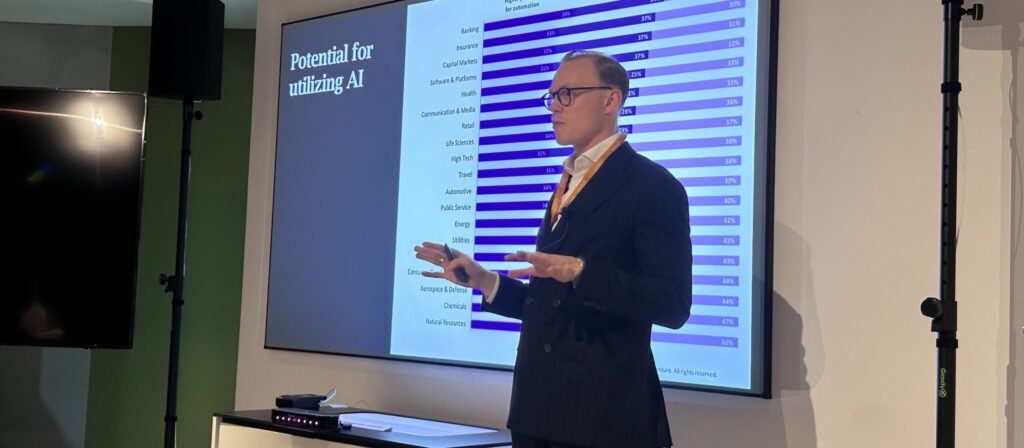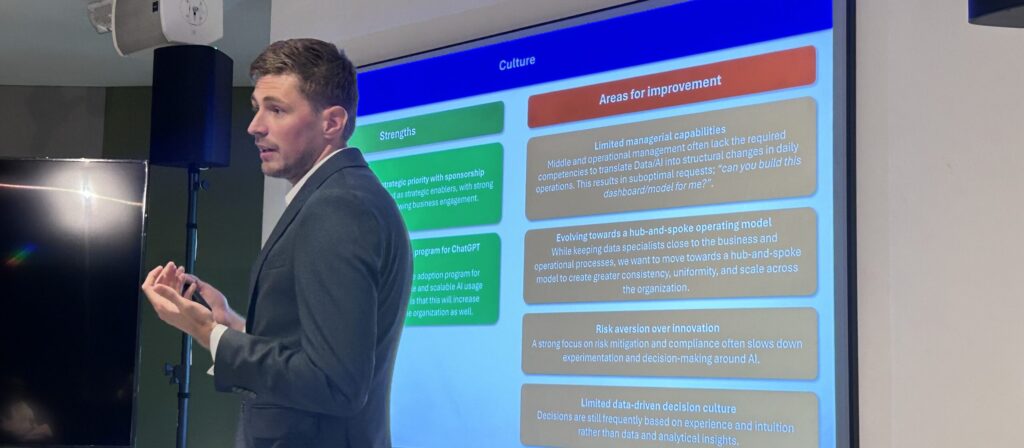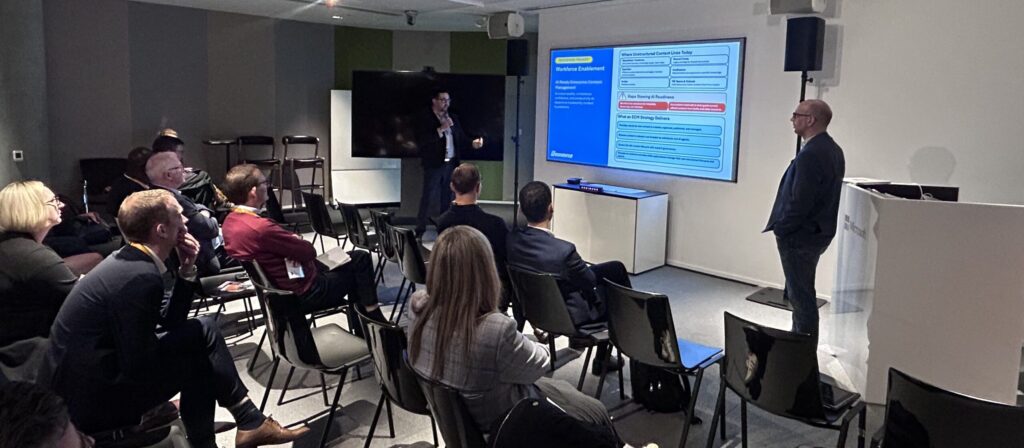
Unipol embarked on a structured, enterprise-wide AI transformation programme, combining top-down prioritisation with bottom-up ideation. Starting with broad benchmarking, the insurer identified 98 use cases, of which a smaller set of “golden use cases” accounts for the majority of expected value.
The organisation uses a dual framework to assess use cases, balancing productivity gains (automation) with effectiveness improvements (enhanced decision-making and customer value). Key areas of impact include underwriting, claims, and conversational interfaces, which together represent around half of identified opportunities.
Unipol has progressed into a scale-up phase, building reusable AI “assets” (e.g. document parsing, summarisation, chatbot capabilities) that can be deployed horizontally across business lines or vertically within processes. More recently, the mutual is exploring agentic AI, adding orchestration layers that enable coordinated human–AI workflows across complex operations such as claims.
Governance and risk management are deeply embedded in the programme. All use cases are assessed against regulatory frameworks, and continuous monitoring ensures performance and compliance. Achieving high accuracy is iterative, requiring extensive testing, feedback loops, and collaboration with business teams.
Key lessons for mutual insurers include using a structured prioritisation framework to focus effort on high-value use cases, balancing productivity gains with effectiveness improvements, building reusable AI assets to enable scalability, and combining bottom-up innovation with strong top-down direction.