Univé (Netherlands) has implemented a sustainability programme structured around nine workstreams. These include CO₂ reduction, ESG impact assessments, sustainable products, social impact, data, policy and strategy, regulatory alignment, and CSRD compliance.
A critical initiative within this programme is the ESG impact assessment workstream, which evaluates how ESG factors affect the organisation and how its activities impact the wider world. This includes qualitative and quantitative assessments of climate risks, particularly for underwriting and investments, with scenarios drawn from authoritative sources like the Intergovernmental Panel on Climate Change (IPCC) and national meteorological services.
Univé recognises that ambition-setting is essential. It has developed an “ambition calendar” focusing on five key areas, including climate mitigation, adaptation, and biodiversity. Decisions on whether to pursue carbon neutrality or a net-zero strategy influence investment and underwriting portfolios alike.
Net-zero is regarded as the “gold standard”, requiring that residual emissions are compensated through in-portfolio solutions, rather than offsetting alone. This approach aligns Univé with leading global reinsurers who have already committed to net-zero targets.
Nature-based solutions are a recurring theme in the organisation’s adaptation strategy. Examples include flood storage areas, green roofs, and sustainable urban drainage systems, often developed in partnership with local authorities and research institutions.
Climate change not only influences current risks but shapes the future of insurance. Univé is increasingly factoring sustainability into product development and underwriting decisions. Questions are being asked about whether long-term relationships with high-impact policyholders are sustainable. Mutuality, as a model, relies on solidarity, but also on reciprocity. Policyholders are expected to contribute to resilience efforts, with the insurer supporting those who are willing to adapt.
Zenkyoren (Japan), a prominent mutual aid insurance organisation within Japan’s agricultural cooperative system, has long been rooted in the principle of community support. Originating from the foundational ideals of “one for all, all for one,” its approach to mutual insurance has grown from the legacy of Japan’s rural cooperative movement and continues to evolve in response to modern challenges.
In recent years, Japan has seen an increase in the frequency and severity of natural disasters, including typhoons and earthquakes. Zenkyoren has developed a comprehensive disaster response framework designed to address three main stages: emergency assistance, recovery of daily and agricultural life, and long-term community resilience.
Immediately following disasters, local members mobilise to provide emergency meals and distribute rain prevention sheets to affected policyholders. These efforts mitigate secondary damage and support basic needs. Simultaneously, JA Group teams are deployed to clear debris, restore farmland, and hold farmers’ markets to support affected agricultural communities.
Zenkyoren utilises digital tools such as real-time disaster alert emails and evacuation mapping systems. These tools are particularly critical in earthquake and tsunami-prone areas, where rapid evacuation can mean the difference between life and death.
The earthquake that struck the Noto Peninsula on 1 January 2024 highlighted the vulnerability of ageing rural populations and the need for robust disaster response systems. The region suffered extensive damage including structural collapse, landslides, and fires exacerbated by water outages.
Zenkyoren responded swiftly by establishing a disaster response headquarters on the same day. More than 1,200 staff were mobilised to conduct door-to-door damage assessments, using tablets and satellite imagery to accelerate claims processing. Of the 151 billion yen paid out in claims, 89% reached policyholders within six months, a testament to the company’s efficiency and preparedness.
The disaster also exposed critical issues: outdated housing built to pre-1981 standards, difficulty in contacting elderly policyholders, and the need to involve family members in claims processing. In response, the insurer upgraded its mobile application, integrating features such as evacuation maps, contract verification, and family contact details. This allows members to manage their insurance even in the absence of physical documents, providing reassurance during evacuations.
Zenkyoren’s focus is now on strengthening its connections not just with individual members, but also with their families, reinforcing its role as a community-first insurer.
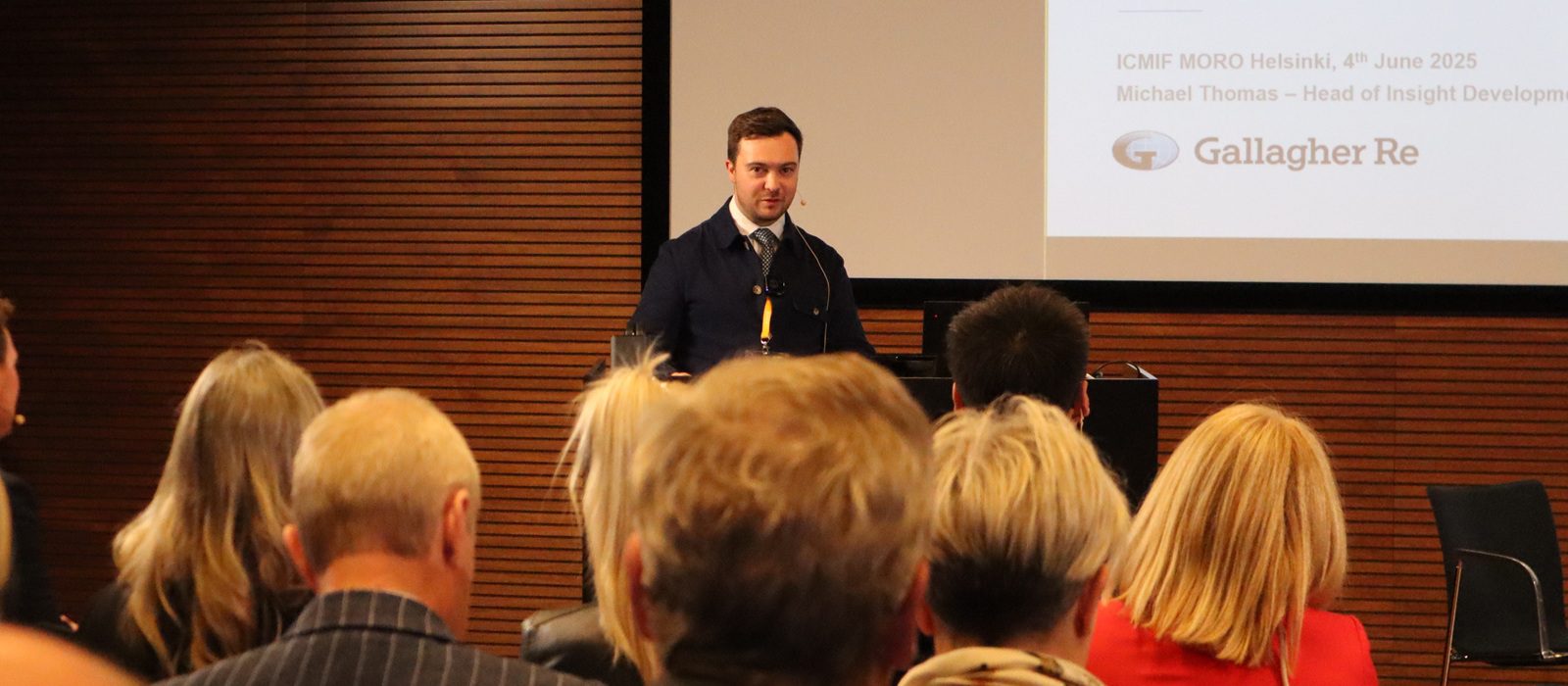
Gallagher Re has highlighted a significant shift in global natural catastrophe (NatCat) trends, with insured losses reaching an estimated $154 billion in 2024. For the past seven years, average annual losses have hovered around $146 billion, suggesting that $150 billion may now represent a new baseline. This reflects rising asset exposure, inflation in construction costs, and climate-driven events becoming more frequent and severe.
Weather-related catastrophes dominate the claims landscape, with events like the 2011 Japanese earthquake standing out as rare exceptions. The growing concentration of high-value assets in risk-prone areas and increasing weather volatility underscore the importance of resilience planning and maintaining strong insurer balance sheets, not just for financial stability but also to safeguard communities.
A closer look at 2024 reveals elevated losses from severe convective storms (SCS), tropical cyclones, and floods. SCS alone caused around $64 billion in insured losses, with the U.S. contributing a significant share. Notably, 63% of these losses came from non-peak perils, highlighting the need for insurers to reassess how they model and manage these now-frequent, high-cost events.
In the U.S., the number of billion-dollar NatCat events hit a record 21 last year, while reinsurers reduced their exposure, dropping their share of global insured losses from 9.2% to 6.9%. Meanwhile, their combined ratios have improved, leaving primary insurers to absorb more losses. This trend indicates growing pressure on direct insurers to handle high-frequency, lower-severity events that cumulatively pose serious financial challenges.
Europe is also facing increasing NatCat pressures, particularly from hail and flood events. Italy has seen rising hailstorm losses tied to severe thunderstorms, while flood risk has grown more complex. Though annual insured flood losses haven’t shown a clear upward trend, events like Storm Daniel in Greece and Storm Boris in Central Europe have broken rainfall records, demonstrating the growing volatility and need for accurate flood modeling.
Proactive mitigation efforts are proving critical. Simulations show that flood defences during Storm Boris halved potential losses, and the UK’s resilience investments are delivering significant returns. As climate extremes become more common, the insurance industry must evolve, refining risk models, enhancing financial preparedness, and ensuring long-term capacity to protect people and assets in an increasingly unpredictable world.
Speakers:
- Gerhard Koster, Reinsurance Manager, Univé Re (Netherlands)
- Harold Hendriks, Sustainability Officer, Univé (Netherlands)
- Makoto Sato, Manager, Zenkyoren (Japan)
- Michael Thomas, Head of Insight Development – Global Property Analytics, Gallagher Re (United Kingdom)