This transcript was generated using automated transcription. While efforts have been made to ensure accuracy, some errors or inaccuracies may remain.
Ben Teller:
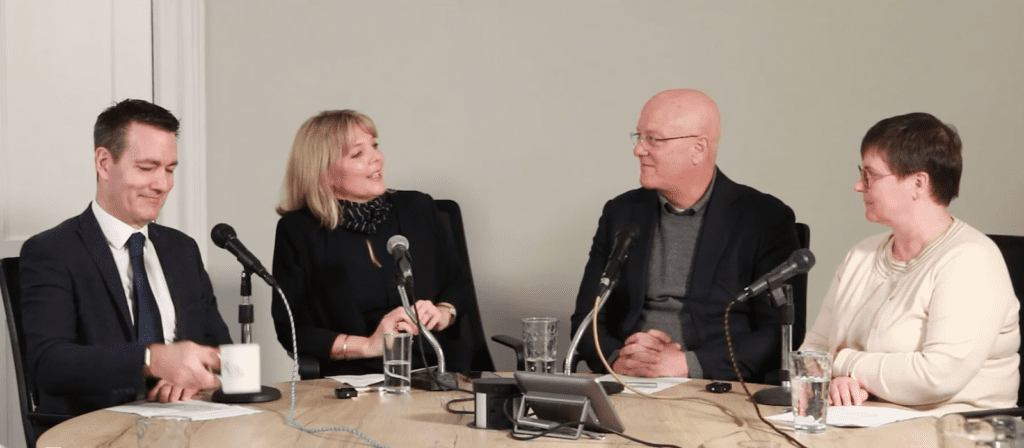
Hello everybody and welcome to today’s ICMIF webinar, the seventh in our series of Mutual Leaders’ Insights where we have a panel of ICMIF member CEOs. In terms of today’s panel, we have three CEOs from our members across the world. Today’s webinar will be one hour and we’ll cover a number of strategic topics including the leadership challenges facing CEOs across the world, how they’re adapting their businesses for the future and how their organisations are leveraging their mutuality within their business strategies. So today I’m very pleased to be joined by Valerie Lavoie, who is the president and COO of Desjardins General Insurance Group in Canada. Johan Van den Neste, who is the CEO of Unive in Netherlands and Peter Beaumont, who is CEO of Cornish Mutual in the UK. Valerie, Johan, Peter, thank you for joining me today.
Peter Beaumont:
Thank you.
Ben Teller:
So, to begin with, perhaps you could all introduce your organisation very, very briefly and highlight some of the key issues that are currently top of your mind as CEOs of leading mutual cooperative insurance companies across the world. Valérie, perhaps we’ll start with you.
Valérie Lavoie:
Thank you. Hello everyone. So yes, Desjardins General Insurance Group is part of the largest financial cooperative in Canada and the eighth largest in the world with assets of more than Canadian $510,000 billions. And DGIG actually, so Desjardins General Insurance Group ranks among the top three PNC insurer in Canada with Canadian $8 billion in premium volume. We also recognise as one of the best employers in Canada according to several rankings and we hired more than 55,000 employees in Desjardins in 2,200.
I would say Kaiser board members, okay, is like the credit unions, so branches of the group, bank group. And what I can tell you maybe it’s that in the PNC we are reaching our clients by multitude of ways, including direct channels for sure and the web with some assisted channel with call centres. We have also exclusive agents that are selling many different financial products exclusively for Desjardins. We have also Affinity programme, Affinity Group with a specific brand and as well as we have a unique caisse-based insurance model and not soon, but we added few years ago, one year ago, two years ago, sorry, broker channels in our model in PNC. So I will stop here, Ben, to let the other ones to introduce themselves.
Ben Teller:
Thank you very much, Valérie. So moving from Quebec to Johan firstly in the Netherlands.
Johan Van den Neste:
So, Ben and the others, Unive today started 230 years ago as a solution for farmers, now fourth financial player in the Dutch market, very all round. And we have I think a unique combination of being fully independent brokers that can sell any product in the Dutch market, not only our own products, but we also have our own PNC insurance company, our own reinsurance company. And we are also a healthcare provider in the Dutch market together with one of the leading healthcare insurers, but we do that under the label of Unive. So today, 2 million members and fully omnichannel, and I think one of the strongest brands in the Dutch market with still a huge potential.
Ben Teller:
Brilliant. Thank you very much, Johan, and to Peter Beaumont from Cornish Mutual in the UK.
Peter Beaumont:
Oh yeah, hello. So Cornish Mutual, we’re at probably the other end of the scale. I think we have to knock some zeros off the numbers you guys are quoting when we’re talking about Cornish Mutual. We’re a niche within a niche really. I mean, similarly, I suppose to Unive founded by farmers, but we’re very much still just focused around that farmer offering. And also we are really just working in a particular region of the UK. So we’re based down in the Southwest. So we’re not quite just Cornwall, so we have extended beyond our Cornish borders, but still only four counties. Yeah, we operate a direct model, so we underwrite everything ourselves.
So it’s all our own products other than the add-ons and operating over the phone and we have employed people out in the field across our region going out and meeting our membership. And I suppose the areas we’re moving into, farming’s under quite a lot of challenges at the moment. So we’re looking at how we can broaden our offering to try and address some of those challenges. And I think that having that tight niche is quite helpful when it comes to building out the proposition, because it does mean we’ve got a very, very clear target audience and therefore we can be very focused on the things we want to do.
Ben Teller:
Thank you very much, Peter. So it’s great to hear three very diverse ICMF member companies operating in different markets, different market contexts across different countries around the world, but similar affinity groups, similar business lines. And as we’re probably going to hear now, very similar challenges that you’re facing as CEOs of these insurance companies. So as we look at leadership challenges and how you are preparing your organisations to adapt, transform and really embrace the change that we’re seeing in this ever-changing and ever complex world, what are the biggest challenges? What is the thing that’s keeping you up at night as CEOs? Valerie, perhaps we’ll start with you.
Valérie Lavoie:
Yes, actually I have two main challenges I would say that keep me awake at night. The first one is really all the challenge that all the industry is facing I guess is the climate change or the climate resiliency, I would say. It’s already felt that is increasing the frequency and severity of weather-related event and natural disasters. As a society, we need to address this and be prepared for it. And what we’re doing at DGIG is we really try to build a better life or better be equipped to face this challenge because it affects the wellbeing of our insured members and clients. So we are working really to understand, better understand, sorry, and break down the different types of climate apparels and how they manifest. Also, we can also model potential impacts and adjust our underwriting rules accordingly. This allows us to better support our members and clients in building climate resilience.
And in practise, this takes the form of prevention and education as well of support during and after a climate event. So we are acting really before the event, during the event, and following the events. So we really want to restore our client situation as quickly as possible after a loss. And so we want to go further even with this. So we want to guide our members and clients to build back better and on a resilient building mindset. So yes, we’re doing a lot of advices in that. Also, the second major challenge is probably the same for everyone, but the transformation of our operations to adapt to AI, particularly with GenAI, I will say. And I would say in three main different ways because we need to bring value to our members and clients into this. So it’s not AI for AI. It’s not our purpose. It’s not IT purpose. It’s more insurance purpose and supporting our members, but we need to adapt at one point because we see the changes in the behaviour of our members and clients that are using this new technology.
AI are using this for a while in the PNC insurance DGIG. However, the GenAI brings something else and is more used by members and clients. So what does it mean for us? How we can adapt to them? So we’re looking at this in this first lens. Then for our employees always also, the tools, processes and roles will evolve. And here again, it’s adaptation and skills development are very, very critical. So it’s really how we can introduce this and that it will brings value to our employees as well. And maybe the dark side of the GenAI is all about fraud because it will be amplified for sure. It is already amplified by its use. And so we are trying for sure to adapt and try to figure out how to fight this fraud because it amplifies the fraud that we already know everybody. So it’s probably the main two topics where for us it’s a big challenge.
Ben Teller:
Thank you, Valérie. The insurability due to climate risk and transformation level are probably issues that I know Johan and Peter will both be facing. Johan, from Unive’s perspective, are those-
Johan Van den Neste:
Your question was what keeps you awake? Well, on number one at the moment, basically that’s a little bit what Valerie also said is cyber risk. So cybersecurity, I’m very hopeful in the possibilities of AI, but the power of the new large language models like Mythos is so powerful that I’m also very worried. I see that with colleagues in the Dutch market, they are already testing with those LLMs and the ease in which they find leaks in their systems is incredible. So that keeps me really awake. And now going to… Yeah, maybe another thing that keeps me awake, but on the other hand, it’s going too well with Unive.
So we’re performing very good, but I see also a lot of opportunity for our model and I think the aim to go really profit for purpose, to extend that to a greater amount of purpose in the Dutch market where there’s really a need and there I still see that we are not changing fast enough. And that’s not something talking negative about my organisation because in brand position, in digital transformation, in performance, we’re doing well, but there are a couple of areas where we can even do much better and especially in the independent financial services advisory branch there we really need AI to speed up.
Ben Teller:
Thank you. And Peter, what from your perspective challenges facing Corniche Mutual and you as a leader?
Peter Beaumont:
Well, I suppose I’ve gone third and I suppose I’d tag mine onto the end of the ones that Valérie and Johan have mentioned about. I think they all stem from this increasing volatility and systemic risk. So you mentioned climate change side and the AI, but the context shifting you have to do now to swap between these things as they come along. And I suppose another part of that is when I look at our membership in farmers, the things that are hitting them are not necessarily risks that are insurable anymore. And so that’s we’re looking to how can we help mitigate risk beyond just insurance because things that happen, as we know, things that happen to everyone all at once are very, very hard to insure.
So I think that’s what probably in that category of keeping up at night, how can we solve those member problems when insurance isn’t the answer, but it feels like it’s close to that. And I suppose then also on that, the way services are being delivered now is there’s a move to simplification. Insurance has traditionally been quite a complicated exercise with lots of complicated processes and trying to shift that, do something that’s got quite a lot of complexity and present it in a simple way going forward. So meeting those expectations for future delivery. We talked about AI, but that can help address some complexity, but ultimately people want to be presented with something that’s fairly straightforward in that digital layer, which is obviously becoming more and more important.
And similarly, I suppose the transformation side, probably the challenge for us there, and maybe this is to do with scale, I’m not sure it is, I think everyone has the same problem, but you can have the ideas, but how do you move beyond that ideation and into the scale-up phase, it’s quite difficult to get out of that, having a good idea and then scaling it across the organisation. And I suppose with all that on the table prioritisation, how do you prioritise in that world when there’s always something new coming along? I’m sure we’re going to have an inflation when it feels like we’re going to have an inflation spike, so maybe that’s the next one along as well.
Ben Teller:
Thank you, Peter. You touched on a few really interesting topics there around prevention and also the change of your business model, your service delivery model. Do you feel that’s something that’s going to be top of your mind going forward or do you think there’s other priorities that come in?
Peter Beaumont:
I think we are forced to constantly evolve. I think like everyone else, we’re embracing some of the AI changes that are coming along, but that can’t be the strategy. That’s only ever the enabler. So I think those things, you’re having to absorb those, but you’ve still got to bring about strategic change as well. So I think it’s trying to do all those things in tandem. But yeah, there is an expectation that I think the underlying products will be similar, but the channels through which they’re being delivered are changing all the time. Some people often say insurance is behind banking that banking’s ahead and I think there’s a little bit of hand wringing, but I’m comfortable with the pace of change for us in the main. I think we have got time, especially with our face-to-face model, but we definitely need to take all that on and change that delivery model without losing that ethos and the connection with members. Because what we don’t want to do is push everyone into a digital space and then not have the opportunity to speak to them because that is really where our competitive advantage lies.
Johan Van den Neste:
Absolutely.
Valérie Lavoie:
May I add, Ben, sorry on this, because I think it’s very interesting. I feel that the strengths of mutuals and cooperative is really based on proximity with our members. And I feel within the digital world or omnichannel world or whatever AI world, I think it will be a key for us to stay connected to our members to make sure that we continue to bring value in this. So what you’re saying, I think it’s very important so that we find a way in this world in changing our operational model or distribution, that we keep this element that probably distinguish us from others at one point. So important.
Ben Teller:
Johan, do you want to continue with that? I know there’s something that’s top of mind for you as well.
Johan Van den Neste:
Yeah, I fully agree. So mutuality stands out and why does it stand out? Because you want to be accessible, you want to be close to your members and you really want to serve them on a personal level. And that’s fascinating because in this data, AI driven technology world, you could easily drift away from that. And so what we really want to do is build on this mutuality and we say, okay, members can count on us, but we also count on our members and society counts a little bit on all of us together. And we have made that really concrete in clear promises, what we deliver, what we also expect, and that’s not you should behave, but we really want that they contribute to the social model, social impact. And from there we start building also our platforms, data AI models, but always focused on this perspective.
And then you see that in this transformation, you can even make much more impact on a personal level. So we see that in legal assistance where we have our members, we make a transcription of the phone calls so people can really listen immediately actions are set out automatically and you can easily then return on a shorter term to the member a good advice. So that’s just one example, but we see it also in underwriting. We make it everywhere more personal and of course this also comes with a reduction of cost so that we can better perform also on our purpose role. So yeah.
Ben Teller:
Johan, you spoke previously about the idea of purpose and how that’s something that you’re leaning into in the Dutch market. How do you feel that your mutuality and your structure as a mutual helps you embrace your purpose? And do you think this will be a competitive differentiator going forward?
Johan Van den Neste:
So good to know for all of you. So Unive is not just one company, it’s eight regional, fully independent companies with one central organisation who runs the IT, the online business and builds the brand in the Dutch market. And of course it’s not like you have several captains on the ship then, of course. So it makes it a little harder to set out a clear strategic roadmap. The good news is once you have it, we all stick to it, but on the other hand, what we really share is this mutual identity. So there’s never a discussion on that. So I always call that the mothership. We are always on the mothership, although we might drift away a little bit in execution of strategy, but we always come back to it. And what we are now doing is really working on this federal model where we say, okay, you have your own goals, but you also have this shared goal because that would be the foundation of them building the mutual brand much better than it is today. Yeah.
Ben Teller:
Peter, what about you? Where do you see your competitive differentiators in the UK market and is your mutuality part of that or is it more just the proximity that you have to your customers and knowledge of your affinity group?
Peter Beaumont:
Yeah, I would say it’s the latter. Having been in the sector a long time, I’ve heard people agonising about how to leverage mutuality and how to make people feel it, how to make your members feel it, and how do you communicate that? And I think where I’ve landed now for quite a long time is you land that internally and then it’s how you make your people internally feel that they’re very much behind then the brand and the delivery, and that’s reflected in their interactions with members. And that intimacy that everyone’s talked about with membership, there’s a high level of trust, there’s a lot of discretionary effort. We do what we say we’re going to do. If people go and visit someone and say, “Well, I’ll come back to you with that.” They do.
So I think the competitive advantage that I see it with mutuality is the way it motivates people internally to deliver a really strong level of service and commitment and people pick up on that. At the end of the day, people buy from people and you can feel if people are genuine. And I think actually we’re driving towards a world where authenticity is more important and I think mutuals are in a really good space for that. And I think that you see companies trying to, I suppose, virtue signal and they sometimes get caught out because it’s not genuine. I think mutuals genuinely have that and I think that is a big long-term advantage.
Ben Teller:
Valérie, as an organisation at a different scale, is that something that resonates with you as well?
Valérie Lavoie:
Yes, for sure. We are cooperative and probably one of our competitive advantage is really that we are giving back to community. I will say so the money is really for a purpose for our members and clients, not for any shareholders. So it’s really to give back to communities. And at the group level, we are really, really doing a lot of donation, a lot of implication involvement in the community. We are encouraging the community really, really closely. So we have regional councils. We have a forum where we are talking with people that are incurred in the communities to see, okay, what do the members want from us so that we can provide them with good advices or good, I would say be very relevant to them even on a regional purpose level, sorry, regional level. Also, we have for sure all our democratic governance that is very levered in our organisation.
So there’s a lot of people that are elected by members that are represented globally. And I really feel that what at the end behind that, it’s really the proximity we are able to create with members and clients that distinguish us from others. We’re able to offer all the financial products on the same roof. And in Canada, it’s not usual, I would say. So it’s probably one of our biggest advantage. We can sell all the financial products under the same roof for Desjardins. And so it’s very helpful for the members to be surrounded by all the financial products that he needs and with very specific advices and personalised advices. Again, the cooperative model is really very, very relevant again in this perspective. So yes.
Ben Teller:
Thank you very much, Valérie. We’ve touched on it briefly, but transformation is obviously something that the whole industry is going through. And I think we also mentioned the pace of change has never been faster and it will probably never be slower in the future. What are your organisations doing to really embrace this pace of change, looking to innovate and change, but to stay ahead of the market yet not losing the heritage and the history that you have at maintaining that strong performance. Johan, perhaps you can share your perspective.
Johan Van den Neste:
I’m just going to give you a nice example. I think it’s the example that close to a year ago, I think it was July last year, one of our managers came up with the idea, said, “Why don’t we give everyone access to AI?” And well, doing that to 3,500 people is quite a step actually. And where we normally see a process, wow, we have to really think about it and let’s do a risk analysis. But here we really found a couple of other managers saying, “Well, I believe in this.” And then so in August last year we decided to do that. We set up the programme in the 1st of January. We started with 300 AI champions starting to fully work with AI, but it was just not opening up the chat but also having a structured programme, but it was run by our own people, no consultants and we were only a little bit assisted by OpenAI in this case.
And then after three months, the 1st of April this year, we opened up to everyone. And then what I’ve seen in the last almost six months is amazing. It’s almost the same as what happened during Corona where we all of a sudden had to start working at home and we made it possible and it worked and it’s now exactly the same. Now the energy in which small groups of people are working on really day-to-day cases and come up with inventions we could never have as management could have thought of, it’s going at such a speed and that’s great talking about transformation. Just one concrete example and you see an enormous space and what really works is that people can on an autonomous level really work on this. So we don’t just talk about it and write it down on paper, we just do it. So nice example, I think of transformation.
Ben Teller:
That is amazing, and as CEO, as leader, how have you really tried to get your employees to embrace that? Because we find that’s not always the case. Is there any lessons you can share on that?
Johan Van den Neste:
Yeah. Well, so one of the targets was how much are you going to show that you really use AI yourself? For me, it was not such a big issue because I was always into data and technology, that’s the way I set the example. But in everything I do, if I send them an email, if I tell them a presentation, if I write a short column, for example, on AI, which I do on every two weeks, I always tell them, I did this with assistance off and just show what I’ve been doing and they’re starting it to show to me and then I learn from them and that’s how I do it.
Ben Teller:
Amazing. Thank you. And Peter, in terms of the transformations going on at Cornish, you’ve touched on a few already, but is AI as part of this journey, this transformation journey that you’re undertaking?
Peter Beaumont:
Yeah. And I suppose similarly, we talked about it and I think we’ve done the similar thing. We’ve opened it up to people and see where the projects come from a bit spontaneously and we’ve probably given a couple of areas a nudge. So I think in the area of coding, the use case Cases are coming together a bit harder, a bit faster, so we’ve maybe pushed that a little bit harder, but we’ve opened it up and then we are seeing projects to create some agents to tackle particular challenges around the organisation. So I think that works quite well.
A lot of change really was focused around IT. So we’ve separated out change in IT. I think it’s very easy to just lump everything in the IT bucket. But as a small organisation, that was the structure we had. I think separating that out and realising there are things you can do which just don’t focus through the IT lens, focus perhaps through the business lens a little bit better. Some other things we’ve found useful using external frameworks. So someone touched on cyber earlier on, so cyber maturity, there are good frameworks out there and similar for AI as well. So there are helpful external guidance out there to take those programmes along and not try and do everything from the ground up and make it up as you go along. I think that’s been very useful.
Ben Teller:
What are the challenges that you are facing as a leader to try and get your teams to embrace this change?
Peter Beaumont:
I suppose I think one of the things that is slightly an issue is AI has the potential to handle complex problems. So I think the challenge is saying simplify the problem first because I’ve got a slight inkling that there is a risk that AI just embeds some complexity and that actually you need to sort out the simplification first and people find that very difficult. I think they’re happy to dive in and start getting into solution, but really thinking about the problem right from the get go and think about it holistically, that’s probably the downside of working in the outer edges of the organisation. They don’t perhaps have the wider perspective. So we have to have a mixture of bottom-up but the governance in place so that you’ve got the top-down view as well without it feeling like people are being just given tasks or having stuff imposed on them so that it’s getting that balance right really.
Ben Teller:
Thank you, Peter. And Valérie, in terms of the transformations that Desjardins are undertaking, what’s causing the main headaches for you in that and how are you trying to lead your teams through change within the organisation?
Valérie Lavoie:
Yes, but actually maybe I can take also AI as an example. So for sure we want to transform the organisation. I told you already, but one thing I think we were using again AI for a while. I will say in sectors we are used to use data and things like this in underwriting, in claims and for fighting fraud. We were using AI, but now we want to transform the organisation because GenAI and agentic bringing something new, not in traditional sectors as we were working on, but more on the people, on agents, on everyone actually. So how we can bring value from this, I think it’s probably the biggest challenge we’re facing to make sure that we are using it to answer a challenge or to solve or fix a problem, a business problem, a business challenge, not just using AI for using AI. So again, we are really by purpose an insurance company.
So we are trying to solve insurance problem more than our supporting our members and clients more than doing AI for AI. So like my peers mentioned, we created a hub as well to help people to use AI to help them to develop their skills in AI because their job will change anyway. So we need to help them to develop their skills. And yes, there’s a lot of appetite around this, but yes, sometimes there are people that are more resistant than others because they don’t know how to use it. So we want to help them to find a way to use AI. At the same time, what we want is to take the opportunity of this new tool of agentic and GenAI to make sure that we are able to decrease our costs and everything. So again, it’s really to attach the problem that we want to solve with the right solution because sometimes it will be with AI.
Sometimes it won’t be by AI and it’s where we need to discriminate a little bit. It should not be just because AI is there that it will solve everything. It’s more to really choose the real use case or the good ones so we’ll fix a problem, a business problem or take opportunities, business opportunities from this. So it’s probably the discrimination between, okay, do we use AI? Do we use something else? Because AI is like everywhere now. So it’s like that it is a magic button, I would say, that it will solve everything, but that’s not totally true. So yes, it brings a lot of value, can bring a lot of value. And also it’s to make sure that again, the use case that we’ll use will really create value from this. So because we’ll invest a lot, we are investing a lot. So at one point it should be benefit for the organisation and for members and clients and for employees as well. So yes.
Peter Beaumont:
I think we’ve all given quite technocratic answers there, but I think one of the things that I want to do is really change what we are doing for our members. So the transformation is probably actually from going from insurance as the… Well, it’ll still be the main thing, but when I was talking earlier about those systemic risks, how can we transform our brand so that it is recognised by the farming community that we can solve other problems as well? So I think there’s a wider capability piece and I think also changing the nature of our relationship with the members, financial services drives you down a particularly compliant GDPR one-to-one, keep everything secret. And I think mutuals actually are more about community and talking in groups.
And I realised we’ve become quite one-to-one in those communications and we are changing to try and open up forums and have broader discussions. So we run events and try and get lots of members together rather than just having the conversation with a customer one-to-one. We get groups and we want to get the membership together and work together to solve their problems because it’s quite hard to tell people what to do. In the same way we’ve been talking about employees, members can solve some of their problems if you get them together talking about it. So I think that’s probably an important part of the transformation for us rather than just the technical change programme that sits inside the organisation.
Valerie Lavoie:
Yeah. So the voice of our members really important what I am getting from you. It’s really, really important to understand what are their problem or their issues or their challenges so we can help them to solve them. So the voice of the members are really important. So we can start from there to adapt. And I feel that if mutuals and cooperative are there for so much number of years, so many numbers of years, I guess it’s because we are relevant to them and we understand what they need. Actually for Desjardins, we are 125 years old, so I feel it’s because we stayed connected to our members and clients and that we adapt along the year to their needs. So it is why we are still relevant for them as much as at the beginning. So I think it’s a good use of mutuality. Mutuality, it means that we are grouping together so when people are grouping together for the same service or whatever, but I think it’s really important to hear from them.
Johan Van den Neste:
And I think in that perspective, it’s not only your own members, but it’s also looking at groups who are less resilient, who have lesser access to financial services to different kinds of reasons and to also stay focused on where can we help and where can we find solutions. So just to give you an example, we had last year a big research done in one of the major cities of the Netherlands and what they found out is that only 60% had a household and liability insurance. So 40% had no cover, really important insurances.
And then we started to dig into it and then we just found out that people have no clue. And then we started working on can we build something like an embedded insurance in their housing corporation where they rent their house from, that is that this embedded insurance is just in their rental price so that they have good cover because we see if once people have no cover, they also come into mental stress. And so that’s also, I think, a responsibility that we have as mutuals in the world to really find also those groups and to see if we can find out something for the future for them.
Ben Teller:
Absolutely. And I think Valérie touched on that in the opening remark about community resilience is so important and with changing climates and new risks coming in, not just because of weather related ones, but cyber risks coming in, that’s definitely something that all insurers, but especially mutuals with their community presence, their local presence are really trying to find new solutions to help reduce that protection gap and make sure everybody gets the coverage they need.
Johan Van den Neste:
Yeah, I agree. Yeah.
Ben Teller:
Peter’s comment there moved us into a direction looking at the continued relevance of our organisations and transformation’s great to become more efficient and from cost control and to create better performing businesses. But what are you thinking around the future in terms of how do you ensure that the mutuals cooperatives that you run remain resilient, remain relevant and also grow and become stronger, especially in the world where there are so many complex challenges, local market context is geopolitical issues. It’d be great to get your thoughts on that because I’m assuming these are issues that are on your mind. They might not be keeping you up at night, but they’re obviously things that are looking in terms of how you are going to be developing your future strategies. Johan, perhaps we’ll go to first one.
Johan Van den Neste:
I’m actually very positive about it because I think that we are moving toward a time and I don’t know in how many years because you wouldn’t say it in the current situation, but I think we’re coming to the end of the capital system as we know it today and maximising output, maximising shareholder value. I see that there’s a new world also and that’s focused on maximising outcome. So also taking into account sustainability, fairness, wellness of people, and that was the model we were always building on already. So a bigger group will be as aspiration to the cooperative model.
So I think for us, it’s easy to start working on it where it comes hard is to really have focus. So what do we choose then and not to do too many things because then we don’t make enough impact and that’s having a more focused strategy and to be honest, to lend a little bit what shareholder-driven companies are very good in making results on clear KPIs. But I’m hopeful our model will grow that people really want to participate in this. It’s purpose-driven. And if we can add that also that shareholder-driven aspect a little bit, then I’m very, very sure that we will grow as a cooperative community all around the world.
Ben Teller:
Thank you. And Peter, do you share Johan’s optimism about the opportunities that may be presented in your local market?
Peter Beaumont:
Yeah, I’m really interested in what Johan said about capital because I agree. And I think one of the problems with the capital models is when the capital concentration builds up and people really get, I don’t know, jealous or ideologically opposed to so much wealth being concentrated, but when you’ve got dispersed ownership in that mutual space, it doesn’t cause those problems. I actually think we can just be just as focused on financial… We might not be the same parameterization, but we can still be very focused and deliver excellent insurance results and financial results. Indeed, mutuals do. That’s why they’ve been around. Well, in your case, 230 years and a bit less in our case, but yeah, so I think they can be really effective. So I think mutuals are definitely here to stay.
And I suppose just picking up on a point I made earlier on, I think people are generally becoming more… There is more demand from consumers to want to be associated with purpose-led brands. I just think we’ve got to be careful that we don’t allow shareholder companies to do slick campaigns and eat our lunch. But I think people will see through that ultimately and know where that value lies. And I think if you’re working as a member of a mutual, you’re not thinking, oh, I’m putting money in the pockets of some rich individual, you’re going to know that. And so I think that’s really compelling and I think it might be more appealing over time.
Ben Teller:
Valerie, what were you in the Canadian context?
Valerie Lavoie:
I shared the optimism of my colleagues, I would say. I’m sure that the corporate seven mutual models will stay for… I think they will be more relevant than ever in the future as well because when you look at just at how the youth, I don’t know for your countries, but in Canada when we’re serving them their values based on all on ESG and all of this thing, it’s really important for them even if all the technologies there, the contact with people are still important and proximity personalization for them, it’s really important too. So it’s really what is about also mutuality and cooperative. So I really feel that we will continue to grow for sure. And again, being and curbing close to people, it’s probably one of our strength in Canada for Desjardins to really be there to really listen to them and what they want.
And by that, I just feel that we are relevant. We have a lot of mechanism to get their feedback like NPS system and everything and not just with that because it’s a lot, it’s not just survey them, it’s to do something with what they are saying to us and making sure that we are helping them to live a better life. And even in all the climate resiliency, I really feel that for mutual and cooperative, it’s really something it’s a value that we have to be more relevant for society in general, not just for the money, it brings only to help communities and so how we can participate into this, it’s really, really important as an insurer ourselves, but as well as how we can be real stakeholders into it to influence other stakeholders as governments and also builders and everything to have a more resilient community, to build a more resilient communities. So yes, I feel that mutualties and cooperative are really on their spot on this. So it’s really important.
Ben Teller:
I think the three of you share some great opportunities and optimism around the mutual sector and at a global level we’re seeing that. Of course, in certain markets, there maybe isn’t that. There’s a bit more of a pessimistic approach due to regulation around mutuality, around the need for scale, creating certain constraints to growth, access to capital. And obviously at the ICMIF network, we’re very diverse membership base. I just want to get your thoughts around the importance of and opportunities for partnership and collaboration with other like-minded mutual and cooperative insurance companies. All three of you I know are very engaged in the ICMIF network through various different activities, but it would be great to get your insights and your perspectives of where you’ve seen the real benefits and the value of connecting with a like-minded organisation. Peter, perhaps we’ll start with you first on that one.
Peter Beaumont:
Yeah, I think a bit of a plug for ICMIF here because I mean through that relationship, we’ve made really useful connections with companies worldwide. We’ve got one of the key reinsurers on our programme met through ICMIF Conference. We’ve got a relationship with other farming mutuals. Well, FMG in New Zealand, for example, but also companies in Canada and that really gives some context for our employees because we now have connections across the company with other organisations. And the UK is probably maybe one of those ones you are talking about, the challenges we haven’t necessarily got the best access to capital. And indeed there was a period of quite a lot of demutualization in the UK, which leaves us a bit thin in that space. I’d like to see that change and it’s not obvious where that extra capital is going to come from, although the sort of current aim of the government is to double mutuality in the UK. We’re yet to se some teeth for that.
So I think for us in particular, being able to connect with other companies worldwide and see that positivity and that forward-looking view and the report about how mutuals are outgrowing stakeholder companies is extremely, extremely useful. And there’s nothing like having seen someone else try something first, it does help avoid some of walking into some of the bear traps. And there’s many examples where we’ve spoken to other companies about how did you develop your member portal? What’s your experience been? Or what have you done with this product? Or how have you attracted that problem? And we use all the different forums. So there’s sustainability forums, marketing forums, people forums, I mean, that’s the nature of mutuality, that melting pot of ideas and opinion really, really helps us arrive at a lot of the right answers, I think. I mean, in terms of actual transactions with other companies, it’s probably just through the reinsurance side at this point, but I think actually there’s a huge amount of value just in the sharing of time and ideas really.
Ben Teller:
Brilliant. Thank you so much, Peter. Valérie, what about you? What’s your experiences and almost the unique perspective you can get with connecting with a peer that’s not necessarily in the Canadian market, but operates in a different market?
Valérie Lavoie:
What I observe since I’m part of ICMIF, notably myself, I mean it’s that really we are living about the same challenges everywhere in the world, quite honestly. Yes, there are some local challenges, but having the opportunity to connect with other players across a lot of countries just help us to see things a little bit differently, share different perspective on the same problem or same challenges and it’s very, very helpful. So the one-on-one meetings notably that we had with other companies on other countries, sometimes countries are more advanced…. Some countries are more advanced than in Canada, so it can just help us to see things coming or we can share also what we’re doing. So again, bring other perspective. So really appreciate it. It brings a lot of value to our company to be able to share with others and really gain in perspective, open our mind in other opportunity.
So it’s really, really interesting. So I think there’s a lot of value to be all together and to form a big community all together that have the same purpose, the same values. So at the end, it’s all about people. It’s all about having a better life for everyone. So I think we’re all looking for this as mutuals and cooperative. So at the end, we just joined our strengths and what I feel it is very, very interesting to see how open people or the companies are to discuss things without… We can feel that we are there for good reasons and that people are there for good reasons and people want to share. So really appreciate that.
Ben Teller:
Thank you, Valérie. And Johan, your perspectives as well.
Johan Van den Neste:
Yeah, I fully agree, of course. So I’m not going to repeat all those things, but I want to share an interesting insight that I picked up last week on this because ICMIF is great and it was founded in 1922, something like that. I think it was one of the reasons was for a reinsurance issue capacity. And I was going over the international numbers and I found out that we have a turnover of US $2,000 million in PNC insurance worldwide, and we pick up 30% as cooperatives and mutuals. So that’s a huge amount.
But if you see how much we pick up only in reinsurance, that’s only six or 7%. So we still bring a huge amount of reinsurance to shareholder-driven companies and they are making huge profits nowadays. They get more and more capital and that’s something where we can still see also find ways to further improve to build up our own reinsurance market even stronger and even see if we can build up our own capital market and to also face these big issues in the world. So fully agree, but hope we can make some further steps towards the future as well.
Ben Teller:
Brilliant. Thank you for that, Johan. And yeah, there’s I think about US $300 million of reinsurance business transacted between ICMIF members. But as you’ve said, there is a great opportunity for more. And I know our reinsurance network has some really engaged companies. Peter referenced a few. There’s been some longstanding relationships there. I agree. 1920 was founded around the pooling of reinsurance of five mutuals and cooperatives, but definitely a lot more opportunity for business to be done between mutual companies, great exchange of ideas, great peer-to-peer sharing, what to avoid doing, having different ideas. But I do think there could be more opportunities to help companies access capital scale and potentially create more resilient businesses that in turn will help them create more resilience communities for their members, policyholders.
Well, we are at the hour. It’s been a fantastic pleasure to moderate this. Great to have three amazing CEOs join us today. Thank you everybody else who’s joined us on this webinar to be part of this amazing conversation. We’re going to be in Toronto for the ICMIF Biennial Conference. Valerie, delighted to be in Canada. Thank you to all your Canadian colleagues and other Canadian members who will be hosting us in your great country in November and we’ll be in touch soon with more information about other ICMIF webinars and services coming up in the next few months. So thank you again to Peter, to Valerie and Johan. Thank you everyone for joining and enjoy the rest of your day.
Johan Van den Neste:
Thank you.
Valérie Lavoie:
Thank you very much.
Peter Beaumont:
Thank you.
Valérie Lavoie:
Bye-bye.