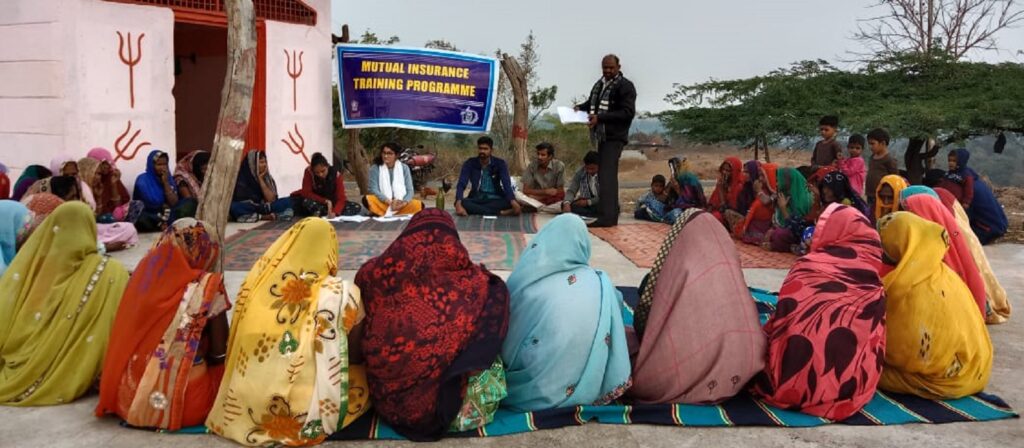
In this CEO interview, Mr Vasimalai, CEO of the DHAN Foundation, an organisation that has been at the forefront of sustainable poverty alleviation in India since 1997 discusses how DHAN blends grassroots engagement with professional expertise to foster community-owned institutions across rural, urban, tribal, and coastal regions. From microfinance to water conservation, education to health, DHAN’s holistic development model empowers over 6.5 million families across 14 states, transforming vulnerable communities into resilient, self-reliant ecosystems.
DHAN Foundation has championed innovation and mutuality, particularly in the realm of inclusive insurance. Through strong partnerships with organisations like ICMIF and its Foundation, DHAN has scaled its mutual insurance model to reach underserved populations with customised, community-driven risk protection. In this conversation, Mr Vasimalai shares insights on DHAN’s journey, the challenges and successes in scaling people-led development, the critical role of partnerships, and the future of microinsurance in building financial resilience for low-income communities.
Can you share a bit of background on DHAN Foundation? What was journey that led to the establishment the DHAN Foundation? What were the key motivations behind its inception? What are the range of services you offer to low income communities and what is your current outreach?
DHAN Foundation, established in 1997, is a professional development organisation dedicated to poverty eradication and sustainable development. Emerging from the Kalanjiam Self Help Group (SHG) movement of the late 1980s, it blends grassroots action with professional expertise. Inspired by Gandhian principles, DHAN follows an enabling approach, building self-reliant community institutions. It focuses on microfinance, water, health, education, and livelihoods, promoting sustainable, community-led development across all the four contexts of urban, rural, tribal and coastal regions. Over time, DHAN has expanded across India, partnering with governments, financial institutions, and international bodies to strengthen local development ecosystems and create lasting impact through inclusive, participatory practices rooted in community empowerment.
The key motivations behind DHAN Foundation’s inception were:
- Blending grassroots with professionalism – To integrate participatory, community-based development with professional expertise for scalable, sustainable solutions.
- Sustainable poverty alleviation – To move beyond welfare and build long-term, self-reliant community institutions.
- Success of the Kalanjiam SHG model – Inspired by its impact on financial inclusion and empowerment of the poor.
- Reviving traditional wisdom – To restore and manage local resources like tanks and irrigation systems for livelihood security.
- Creating a replicable model – To demonstrate that community-led, holistic development could be effectively scaled across regions.
DHAN Foundation’s SCRIPT framework is a comprehensive financial inclusion model that integrates savings, credit, remittances, insurance, pension, and digital transactions to empower low-income communities. The approach ensures that marginalised populations, both in urban and rural areas, have access to financial tools that help them build resilience and sustain their livelihoods.
DHAN Foundation offers integrated development support to low-income communities across India, focusing on:
- Development finance through self-help groups for financial inclusion
- Water resource management to support agriculture and livelihoods
- ICT for development via village information centres
- Education through schools and learning centres for underprivileged children
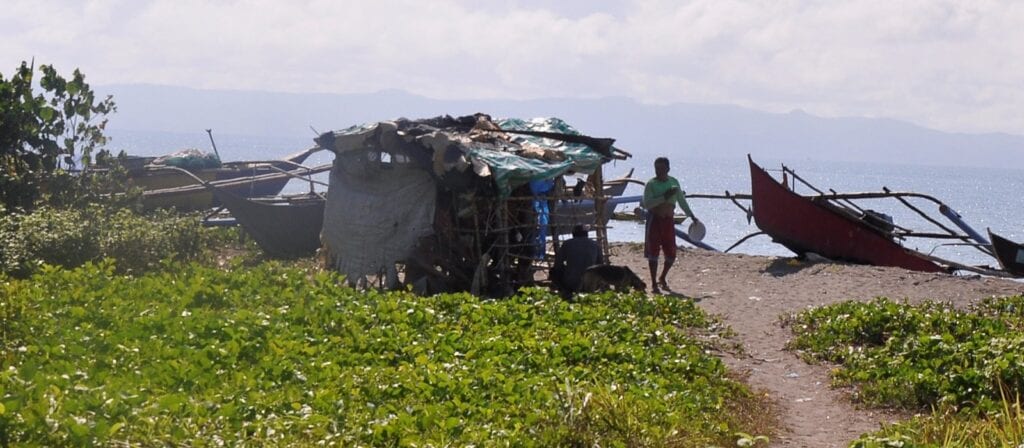
- Coastal conservation and livelihood restoration in disaster-affected regions
- Integrated health and social security measures to address the risks and vulnerabilities of poor
DHAN has reached 6.5 million families across 14 states, organising them into 85,000+ self-help groups, building strong community institutions for sustainable development.
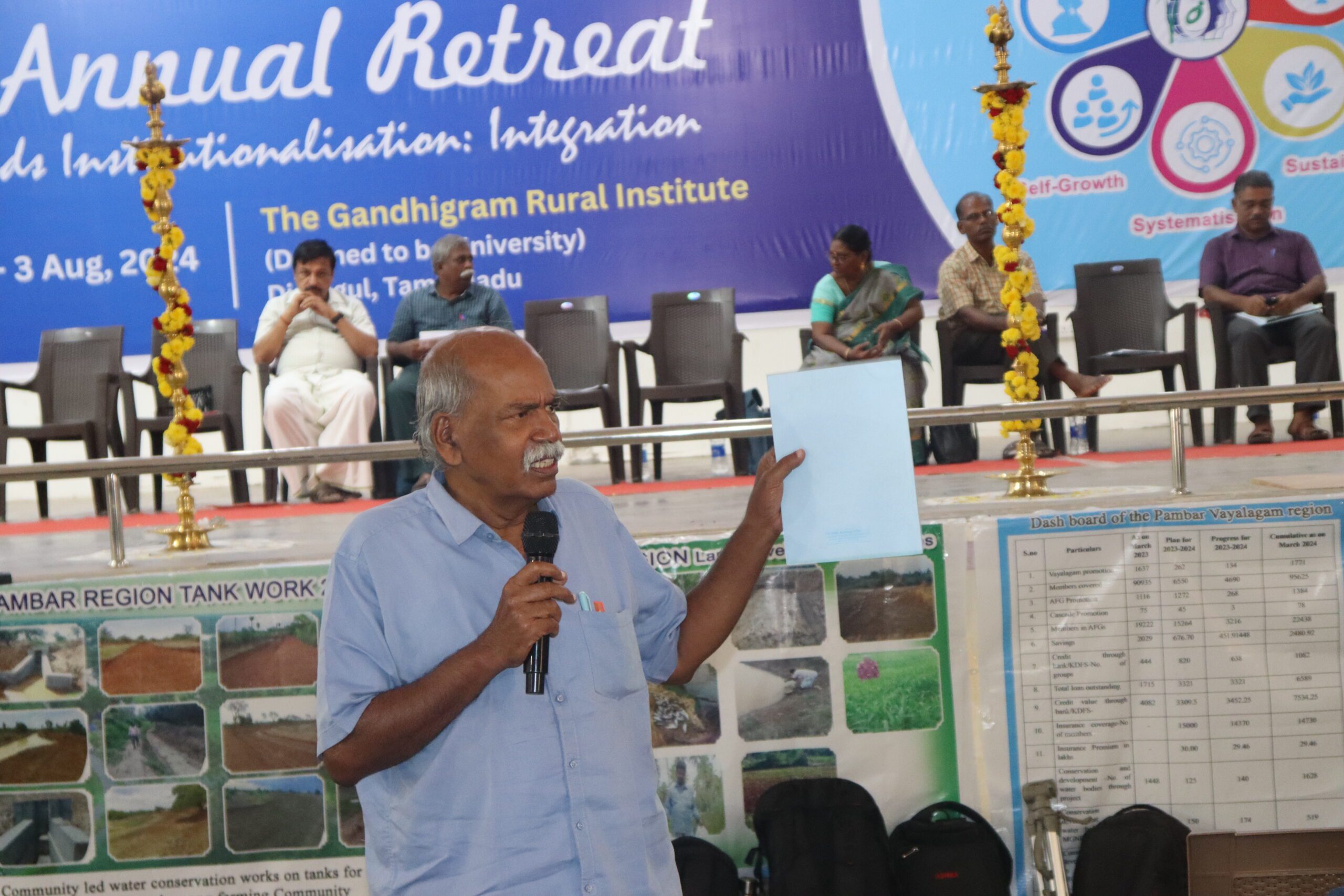
What have been the most significant challenges you’ve faced while growing the DHAN Foundation, and how have you overcome them? What has been the key to your success?
Key Challenges in DHAN Foundation's growth
- Human resources for development work: Finding committed professionals willing to work at the grassroots was a major hurdle. Many lacked the mindset or motivation for long-term community engagement. Even those recruited required intensive training and mentoring. Retention was also difficult due to better-paying opportunities elsewhere. Building a value-driven internal culture and leadership pipeline became essential.
- Promotional cost for social capital initiation: Setting up community-owned federations requires significant upfront investment in mobilisation, training, and basic infrastructure. These costs were amortised for long term and posed a challenge while scaling-up. Ensuring financial sustainability without donor dependency required innovative funding and a phased approach to institution building.
DHAN Foundation addressed the challenge of human resources by establishing a dedicated Human Resource Development department to ensure proper recruitment, training, and continuous learning aligned with local development needs. To manage the high promotional costs of initiating federations, DHAN encourages community-led promotion and mobilises support from government institutions and Corporate Social Responsibility (CSR) partnerships, including projects.
The success of DHAN Foundation can be attributed to its strong community-centric approach, where people’s ownership and participation are at the core of every initiative. The organisation focuses on building robust, people-owned institutions like SHGs and federations to ensure long-term sustainability. A dedicated Human Resource Development system plays a vital role in recruiting, training, and mentoring professionals committed to grassroots development. DHAN is known for its culture of innovation—constantly piloting and refining models based on local needs and scaling-up what works. Its work is deeply rooted in research and field-based learning, enabling evidence-based practices. Strategic partnerships with government bodies, academic institutions, and CSR collaborators have further strengthened its outreach and resource mobilisation. Above all, DHAN maintains a strong emphasis on financial and institutional sustainability, avoiding dependency and fostering self-reliance in communities.
How does the DHAN Foundation ensure the sustainability and long-term impact of its programmes on the communities it serves?
Social capital and nested institutions: DHAN promotes strong community institutions such as self-help groups, federations, and people-managed organisations. These institutions are empowered to lead planning, implementation, and governance, ensuring that development efforts are rooted in local needs and capacities.
- Capacity building: Regular training and mentoring are provided to community leaders, staff, and stakeholders to enhance skills in financial management, governance, and technical areas. This ensures the community can manage initiatives independently over time.
- Decentralised governance: DHAN practices decentralised decision-making, allowing local institutions to make context-specific choices, which increases accountability and relevance of interventions.
- Livelihood-centered approaches: All programmes are designed to strengthen and diversify livelihoods - whether in agriculture, water management, health, or finance - so that communities can achieve economic resilience.
- Financial sustainability: DHAN introduces cost-recovery mechanisms, member contributions, and community-managed funds to reduce dependency on external funding and promote self-reliance.
- Partnerships and policy advocacy: The Foundation collaborates with government bodies, financial institutions, and academia to influence policies and scale successful models for broader impact.
- Continuous learning and adaptation: Through monitoring, evaluation, action research, and knowledge sharing, DHAN adapts its strategies based on field experiences and evolving community needs.
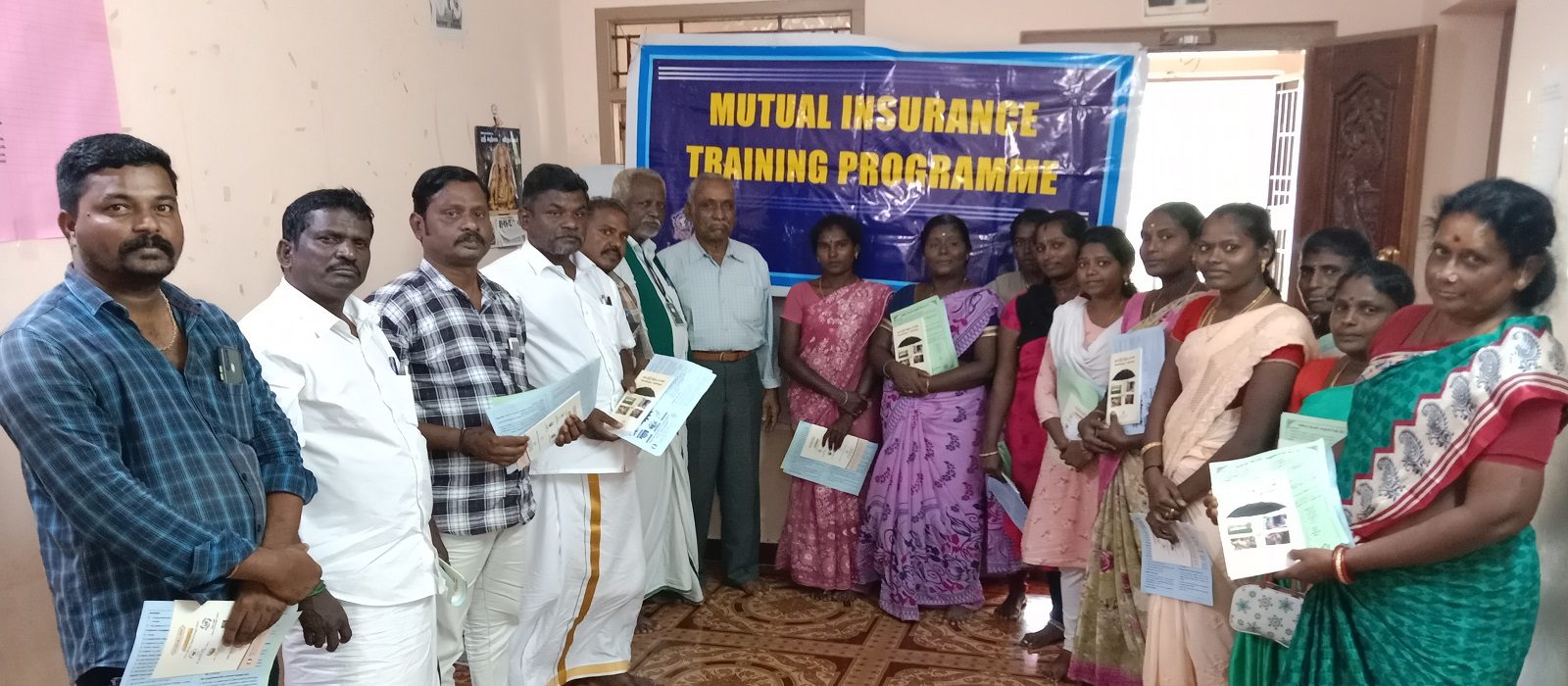
Can you talk a little bit about your relationship with ICMIF and The ICMIF Foundation? How has the mutual insurance programme of Dhan Foundation benefited from its membership of ICMIF and the support from The ICMIF Foundation.
DHAN Foundation has had a strong and valuable partnership with the International Cooperative and Mutual Insurance Federation (ICMIF) and The ICMIF Foundation. This relationship has been instrumental in expanding our mutual insurance programme and strengthening risk protection for low-income and vulnerable communities.
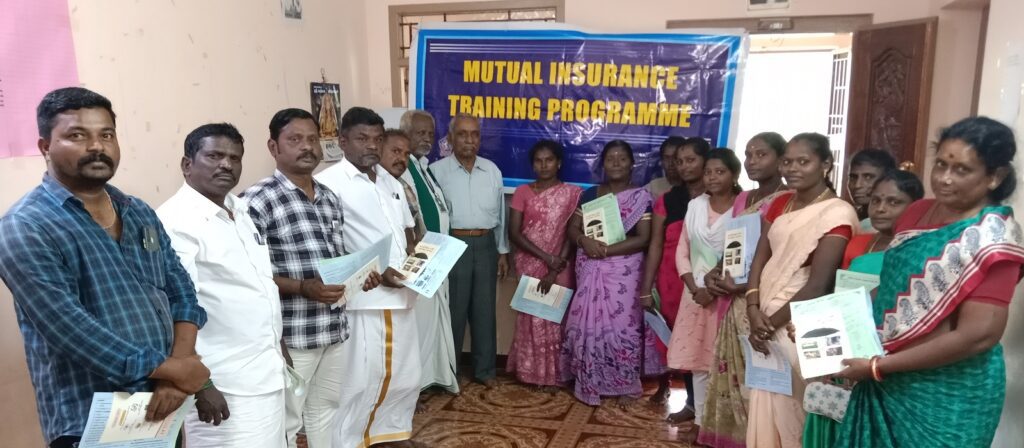
- Capacity building and technical support: Through its collaboration with ICMIF and The ICMIF Foundation, DHAN and People Mutuals (a mutual insurance initiative promoted through collaboration between DHAN Foundation, Oxfam Novib, Rabobank Foundation and Eureko Re insurance company) have gained valuable exposure to global best practices in mutual insurance. This partnership has enhanced the technical skills of our teams in actuarial practices, risk management, and governance. It has also facilitated peer learning and networking with mutual insurance organisations worldwide, enriching our approach through shared experiences.
- Strengthening the Federation Mutuals model: ICMIF’s support has been instrumental in scaling up our Federation Mutuals (Trusts) across India. This has reinforced our commitment to a community-owned and governed insurance model that is financially sustainable through risk reserves and strategic partnerships. The model remains responsive to local needs by enabling the development of contextualised and relevant mutual insurance products.
- Expanding insurance outreach: Backed by ICMIF, DHAN Foundation has significantly increased insurance penetration among low-income communities. We have introduced new life and health insurance products tailored to the needs of the poor, and improved claims processing systems to ensure timely and efficient payouts, thereby enhancing trust and reliability.
- Innovation and policy advocacy: ICMIF has empowered DHAN to engage in global dialogues on inclusive insurance. This includes advocating for pro-poor insurance policies at both national and international levels, promoting technology-driven insurance solutions for financial inclusion, and championing sustainable mutual insurance models that reach and serve underserved communities effectively.
ICMIF has been a catalyst for DHAN’s success in mutual insurance, enabling us to scale, sustain, and innovate risk protection solutions for vulnerable communities.
How does DHAN Foundation leverage partnerships and collaborations to enhance its reach and effectiveness? Can you provide examples of successful collaborations?
The DHAN Foundation amplifies its development impact through strategic partnerships across various sectors, including government agencies, academic institutions, corporate entities, and international organisations. These collaborations enhance DHAN's capacity to implement community-driven programmes in areas such as finance, agriculture, water management, health, and insurance.
Government partnerships: Collaborations with entities like the Government of India, NABARD, and District Rural Development Agencies have facilitated large-scale initiatives in watershed development, tank rehabilitation, financial literacy and strengthening self-help groups. These partnerships have been instrumental in implementing programmes that address rural development and poverty alleviation.
Academic collaborations: The establishment of the The DHAN Academy in partnership with the Sir Ratan Tata Trust exemplifies DHAN's commitment to academic collaboration. This institution focuses on training development professionals, thereby building human resources dedicated to the development sector.
Corporate Social Responsibility initiatives: DHAN has engaged with corporate partners like Ford Foundation, TATA trusts, Oxfam Novib, Axis Bank Foundation, Hindustan Unilever Limited (HUL) and ITC to implement CSR projects aimed at enhancing livelihoods and conserving water resources.
Insurance sector partnerships: In the insurance domain, DHAN has collaborated with organisations such as People Mutuals, a mutual insurance initiative and established partnerships with ICMIF and IBISA. This initiative aims to provide microinsurance solutions to safeguard low-income families against various risks.
International collaborations: Partnerships with international entities like the Canadian Mennonite University have led to projects focusing on the promotion of small millets, involving multiple stakeholders across India, Nepal, Sri Lanka, and Canada. These collaborations facilitate knowledge exchange and the implementation of sustainable agricultural practices.
Through these diverse partnerships, DHAN Foundation has expanded its reach and effectiveness, implementing sustainable development initiatives that have positively impacted over 2.5 million low-income families across India.
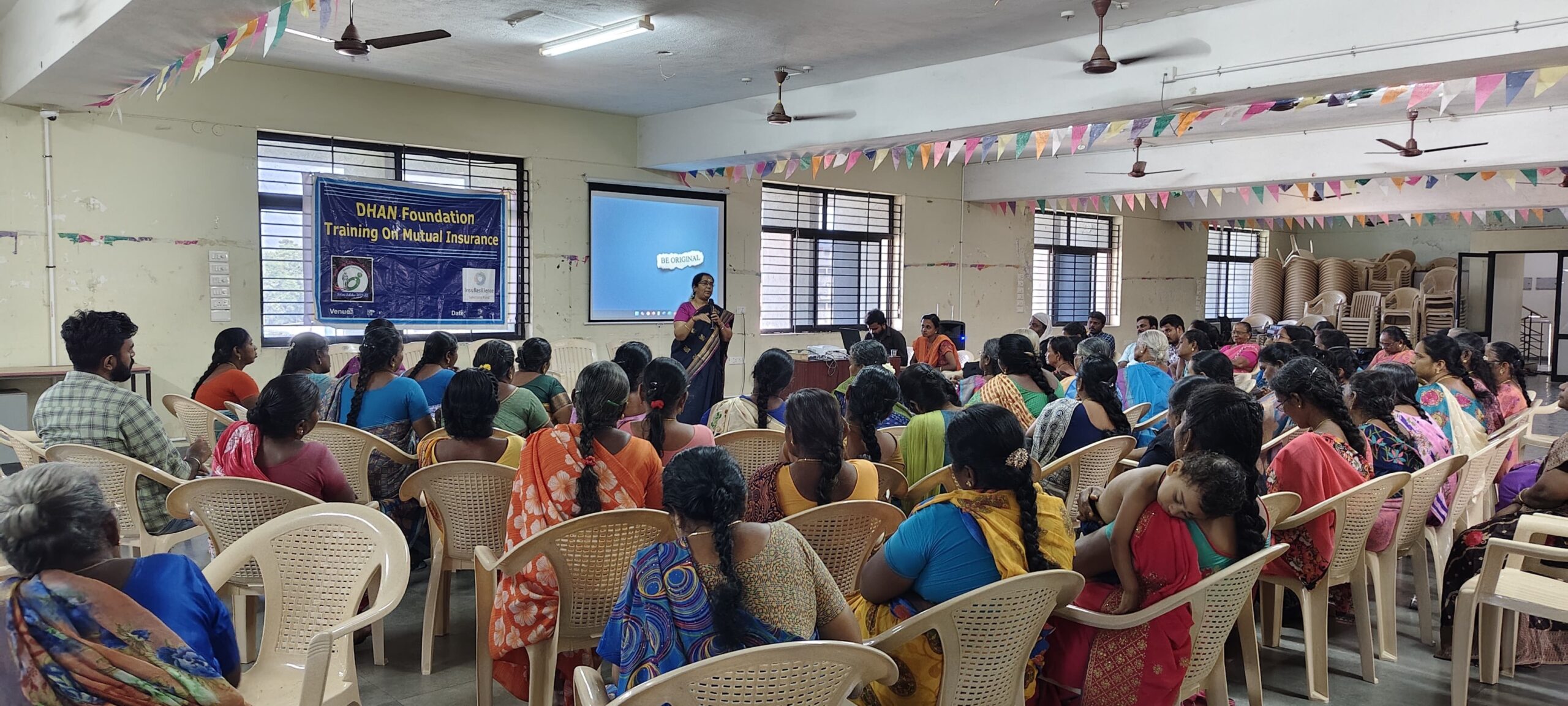
Can you discuss the importance of community participation in the DHAN Foundation's projects and how it influences the outcomes?
Community ownership is the cornerstone of DHAN Foundation’s development approach. It ensures that people are not just beneficiaries but active partners in identifying their needs, planning interventions, and managing resources. This participatory model builds a strong ownership and accountability within the community, making the initiatives more relevant, inclusive, and sustainable.
By involving the community at every stage - be it in organising self-help groups, planning water conservation structures, or designing microinsurance products - DHAN empowers people to take charge of their development. This leads to more effective solutions, better resource utilisation, and long-term impact. It also strengthens grassroots institutions, builds local leadership, and fosters collective action, which are critical for scaling up and sustaining the outcomes of development efforts.
What role does innovation play in the DHAN Foundation’s approach to development, and can you provide examples of innovative projects or strategies?
DHAN Foundation’s innovative approach to development is grounded in building people-led institutions, customising solutions to local contexts, and integrating multiple development themes through community ownership.
- It pioneered the nested institutional model for Self-Help Groups (SHGs), where women are organised into SHGs, clustered, and federated, creating autonomous financial institutions managed by the poor themselves. These federations manage savings, credit, insurance, auditing, and even governance, shifting control from external agencies to grassroots members.
- In water resource management, DHAN demonstrated innovation by reviving traditional tank systems through cascade-level planning, where hydrologically linked tanks are restored and managed collectively by farmers organised into what are known as Vayalagam associations. This approach ensures equitable water sharing, conflict resolution, and sustained maintenance through local contributions.
- DHAN co-creates mutual insurance products with the community, applying local knowledge, historical data, and participatory pricing to design weather-based crop insurance, livestock protection, and health mutuals. Claims are verified and settled by community groups, ensuring trust and reducing fraud.
- In agriculture, DHAN developed farmer producer collectives that use digital tools for market access, price intelligence, and storage. Farmers are trained to aggregate produce, track prices via mobile, and sell directly, reducing dependency on intermediaries and improving income.
- To strengthen accountability, DHAN created PACE (People Accounts and Auditing Enabling Centre), enabling SHG women with minimal education to manage digital accounting systems. These tools simplify bookkeeping and allow real-time monitoring by federations, ensuring financial transparency.
All innovations by DHAN are community-embedded, system-driven, and designed for scale, setting it apart in grassroots development.
How does the DHAN Foundation measure and evaluate the success of its various initiatives and programmes?
DHAN Foundation employs a comprehensive monitoring, evaluation and learning framework to assess the effectiveness and impact of its various development initiatives. The Foundation uses a mix of quantitative and qualitative assessments, participatory evaluations, and external reviews to ensure that its programmes are creating sustainable and transformative change at the grassroots level.
- Results-based monitoring and evaluation: DHAN uses a results-based framework to track progress through inputs, outputs, outcomes, and impacts. Success is measured by achievement of targets, improved quality of life, and efficient resource use.
- Community-based assessments: Community participation is central. Tools like scorecards and participatory reviews allow communities to assess programmes, ensuring transparency and accountability from the ground up.
- Regular internal reviews: Quarterly, half-yearly, and annual reviews are conducted at programme and institutional levels. These assess progress, financial health, team performance, and alignment with annual plans.
- Impact studies and external evaluations: Long-term changes in income, health, food security, and empowerment are tracked through impact studies. External experts often conduct thematic evaluations for objectivity.
- Social and financial audits: Social audits promote community-led verification of outcomes, while regular internal and statutory financial audits ensure accountability and sound financial practices.
- Learning and knowledge sharing: Platforms like Mutual Learning Reviews, retreats, and conclaves foster peer learning. Insights gathered are used to improve strategies and operations.
- Digital management information system and dashboards: A robust management information system provides real-time data for informed decision-making. Dashboards help monitor performance and flag issues early.
- Focus on sustainability and replication: Success is also gauged by the sustainability of community institutions and the replication of proven models in new regions, ensuring long-term impact.
Can you share a success story that highlights the impact of the DHAN Foundation's work on an individual or community level?
This case study explores the transformative journey of Kowsalya, a resident of Dharmathupetti village, Dindigul, who, amidst unexpected adversity, navigated the intricate landscape of financial planning. The narrative throws light on the impact of education and awareness at the level of a Kalanjiam SHG thanks to which there is a convergence of financial inclusion, risk mitigation, and empowerment.
Kowsalya actively participated in the Omshakti Kalanjiam for over four and a half years, accumulating savings of Rs. 35,000 and a healthy credit outstanding of around 1.5 lakh. Her husband Sathish ran a flower shop, providing a modest yet comfortable life for Kowsalya, himself, and their daughter Sasini. Life was comfortable until a tragedy struck, altering the course of her family's future. Sathish met with an unfortunate road accident. ihs wife, Kowsalya, had to borrow money locally for the sudden expenses in the hospital to meet a surgery, at a higher interest rate. Despite all the efforts to save Sathish’s life, he soon passed away.
Little did she know that the choices she made earlier would become her lifeline in the face of adversity. The federation coordinator from her Kalanjiam, had introduced her to the concept of insurance, including offerings from LIC, TATA AIA, and People Mutuals. Kowsalya faced resistance from her husband, Sathish. He believed insurance was unnecessary, considering the premiums would strain their budget. To make matters more challenging, he didn't even have a bank account. But Kowsalya was determined. With guidance from the federation coordinator, she convinced her husband of the importance of insurance. Unable to afford the premiums upfront, she opted for a small loan from the Kalanjiam to secure coverage for both of them.
Tragedy struck in the eleventh month of them paying premiums, leaving Kowsalya with not just emotional turmoil but also a loan for medical bills and a future to secure. This brought to the forefront, the significance of insurance. The payout of Rs. 20000 within two days from People Mutuals and Rs.50000 from the group insurance not only eased the financial burden but also provided relief from high-interest loans taken in desperation.
Subsequently, within the next two months Kowsalya received an additional Rs. 2 lakhs from TATA AIA. She took a brave step towards allocating the claim amount wisely. She always wanted her daughter to get a good education, and this payout enabled her to invest in her daughter's education. She also settled outstanding debts. With the remaining amount she improved the family's flower shop by purchasing an essential equipment, a freezer. This now helps her in running the flower shop’s operations smoothly.
With the insurance payout from PMJJBY and PMSBY where she received 4 lakhs in total, Kowsalya secured a stable future for herself and her daughter. She bought some land and invested in expanding the flower business by adding one more shop. Her story highlights the impact of insurance, turning what could have been a financial crisis into an opportunity for growth and stability.
Kowsalya's story is not just about-facing adversity. It's something that speaks to all of us – a reminder that insurance isn't just an expense; it's an investment in safeguarding our future. Undoubtedly, it is a lesson applicable to a broader audience seeking sustainable empowerment.
Community-level interventions:
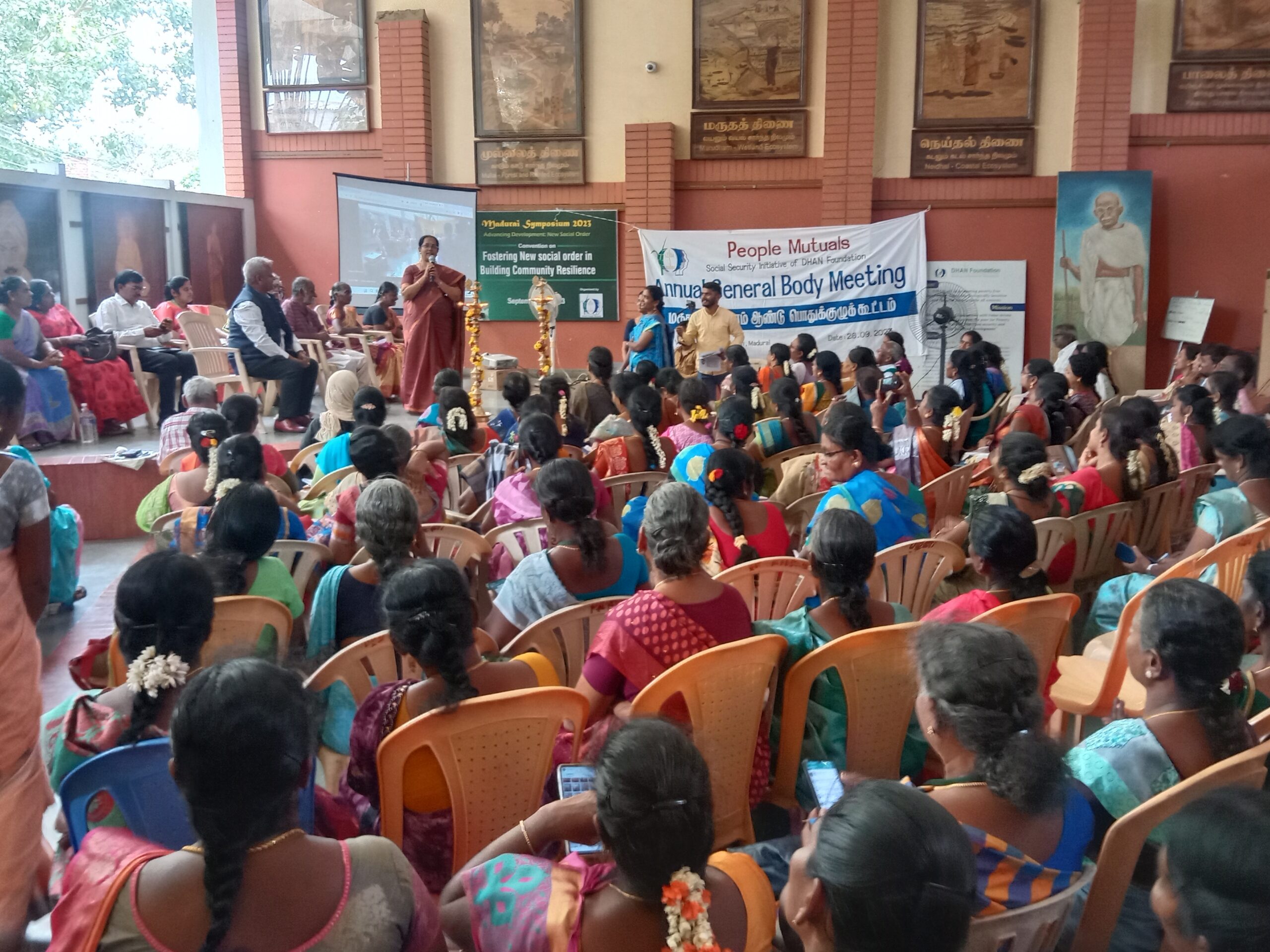
At the community level, DHAN Foundation has pioneered the creation of federated collective structures to systematically address the risks and vulnerabilities faced by the poor. These federations function as locally-rooted institutions that promote solidarity, shared responsibility, and risk pooling, fostering a strong expression of mutuality, especially during times of distress.
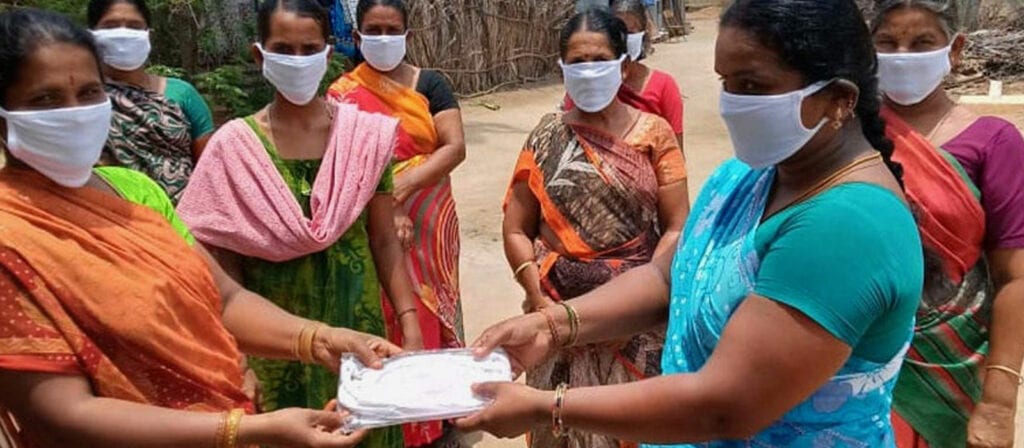
Through these structures, we have designed and delivered affordable and accessible insurance solutions that are tailored to the specific needs and contexts of the community - be it life, health, livestock, or climate-related risks. By keeping premiums low and processes participatory, the poor are not only protected but also empowered.
These efforts have significantly contributed to building community resilience, where members are better prepared to cope with shocks, access timely support, and regain stability quickly. The model reinforces the idea that risk management is most effective when owned and driven by the people themselves.
What are your thoughts on the future of microinsurance in India, and how does the DHAN Foundation plan to adapt to changing trends and challenges in this sector?
The future of microinsurance in India is evolving rapidly, with increasing emphasis on inclusive financial services, digital transformation, and resilience-building for vulnerable communities. As climate risks, health uncertainties, and livelihood vulnerabilities grow, there is a stronger need for accessible, affordable, and efficient risk protection mechanisms. Microinsurance will play a key role in addressing these needs through innovative, community-based solutions tailored to the realities of the poor.
Insurance penetration and retention are crucial for the success and sustainability of microinsurance in India. While reaching a large number of low-income and vulnerable people is important (penetration), ensuring that they continue to renew and actively benefit from the coverage (retention) is equally vital. Without strong retention, trust in insurance systems erodes, and the long-term viability of community-based models is weakened.
DHAN Foundation envisions strengthening its mutuality-based microinsurance model by deepening community participation, enhancing governance, and leveraging digital tools for outreach, enrolment, and claims processing. It plans to introduce need-based, flexible products across life, health, agriculture, and livestock, aligned with evolving community risks. Emphasis will be placed on capacity building at the grassroots level to ensure sustainability and ownership. By treating members not just as policyholders but as partners in risk management, we believe that both penetration and retention can be enhanced, contributing to deeper social protection and long-term resilience.
The Foundation also seeks to collaborate with insurers, regulators, and research institutions to advocate for policy changes that support mutual and community-led insurance models. Piloting innovations, documenting best practices, and engaging in evidence-based policy advocacy will be central to its approach. By integrating technology with traditional community strengths, DHAN aims to build a robust ecosystem where microinsurance becomes a key pillar of social and economic security for the poor in the changing development landscape.