Insurance companies are now at the heart of the sustainable transition: exposed to worsening climate and social risks, subject to increasing transparency requirements, they play their role in terms of social and environmental responsibility and communicate on a variety of Environmental, Social, and Governance (ESG) strategies. Yet, the idea of "sustainable insurance products" is still largely conceptual: there is, to date, no operational framework to consistently assess the integration of ESG factors into non-life insurance products and services. This article presents a pragmatic framework to fill this gap and shows how ESG can become a concrete lever for prevention, inclusion and resilience.
A methodological gap
The insurance industry is currently evolving in a context marked by a simultaneous intensification of climate and social risks. The increase in the frequency and severity of extreme events increases the probability of risks that are now uninsurable, and weakens traditional pooling mechanisms. On the social front, the widening of the protection gap, ie the gap between total economic losses and those actually covered by insurance, raises growing accessibility issues, particularly for households, small businesses or regions that are already vulnerable (EIOPA, 2021). As risks increase, some customer segments struggle to access affordable premiums, which raises questions not about solidarity in the mutualist sense of the term, but about the ability of various insurance models, both cooperative and listed, to maintain an inclusive level of coverage in a context of increasing risks.
At the same time, the European regulatory landscape is tending to become denser. The green taxonomy defines the activities that can be considered sustainable. The Corporate Sustainability Reporting Directive (CSRD Directive) strengthens transparency obligations, even if the adjustments provided for in the Omnibus bill are intended to simplify its implementation. The Principles for Sustainable Insurance (PSI) also encourage the gradual integration of ESG criteria into insurance practices. However, these benchmarks mainly concern the ESG performance of the company or investments, and touch very little on the structure of insurance products themselves.
This discrepancy creates a paradoxical situation. As a result of growing expectations from regulators, customers and civil society, insurers are promoting products that are described as "sustainable" or "responsible". While these approaches are often based on robust internal methodologies, the lack of common sectoral criteria makes it difficult to assess their real contribution. ESG exclusion policies, for example in the case of coal mining or certain industries, are now common and widely communicated. But these exclusions, which focus on what the insurer no longer covers, are not enough to define what a product that actively contributes to the transition would be. This asymmetry reflects a methodological limitation rather than a lack of commitment.
In this context, stakeholders recognise the difficulty of defining a common approach to the "sustainable insurance product" (Stricker et al., 2022). The multiplicity of standards, taxonomy, European Sustainability Reporting Standards (ESRS), PSI or national labels, reinforces this fragmentation, each adapting its method to its portfolio and resources. Although legitimate, these approaches lead to a high degree of heterogeneity that limits comparability and complicates evaluation.
As a result, there is currently no shared framework for a coherent understanding of the integration of ESG into non-life products. This absence is explained by an environment still under construction, in which companies must deal with high expectations, emerging standards and real operational complexity, making it difficult to transparently demonstrate the effective contribution of their products to the sustainable transition.

This article was authored by Simon Perrin, Sustainability Manager, Vaudoise Assurances (Switzerland) and Jeanne Salamin, Sustainability and ESG Specialist, MSc Sustainable Management & Technology. This article is reproduced with the kind permission of ICMIF Member Vaudoise Assurances.
Published March 2026
"Integrating ESG into insurance products means turning a strategic ambition into a concrete impact."
Structuring paradoxes
The lack of an evaluation framework is not only a technical deficit: it limits the sector's ability to play a structuring role in the sustainable transition. Insurance is not reduced to an indemnification function; as a centre of expertise in the field of risk, it already influences the way in which risks are anticipated, distributed and managed within the company. Through coverage conditions, prevention requirements or pricing mechanisms, the products help guide consumption or adaptation decisions in areas such as construction, mobility, housing equipment or the management of Small and Medium Enterprises (SMEs) activities.
This dynamic presents the sector with several ESG paradoxes. In terms of climate, it must continue to cover assets whose vulnerability is increasing, which complicates the pricing process. On the social front, the increased use of fine data improves the accuracy of premiums, but can reinforce inequalities in access to protection in the face of increasingly costly risks. From a governance perspective, ESG commitments at the corporate level remain difficult to translate into products.
This is reflected in the diversity of practices observed in the market. Some large groups have internal benchmarks to integrate ESG into their products; however, these methods vary greatly from one actor to another, as they have been developed autonomously in response to different contexts, portfolios and operational constraints. This heterogeneity does not reflect a lack of effort, as many internal approaches are robust, but it complicates comparison, collective learning and the construction of a coherent approach at the sectoral level.
Without a shared tool, it is difficult to identify the levers for transformation, to examine the trade-offs between environmental and social objectives and to manage the evolution of products in a logic of ESG coherence. Investments remain a major lever for impact, and the sector has strongly structured its responsible investment practices, but they are not enough on their own. For insurance to make a full contribution to the sustainable transition, ESG criteria must also be integrated where the impact for customers directly materialises: in the products themselves, their design, pricing and day-to-day management.
An operational approach
In this context, a pilot initiative was carried out within Vaudoise Assurances to design an ESG assessment grid applicable to the main non-life insurance products, illustrated below in Figure 1. The aim was to translate strategic ambitions into operational criteria, in line with the logic of double materiality, and to better understand what sustainability means in concrete terms at the level of a product. The framework is based on a matrix that crosses three key stages of the value chain, product development, pricing and underwriting, claims management and policyholder support, and the three ESG pillars. It is divided into nine categories and fifteen sub-categories covering climate mitigation and adaptation, circular economy, inclusion and equitable access, product governance, and contractual transparency.
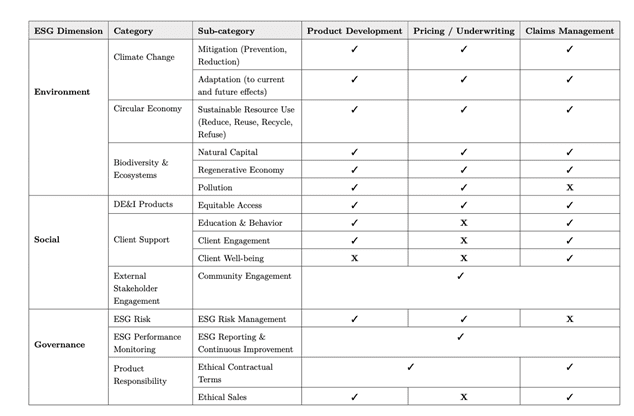
Figure 1 – ESG analysis criteria across the value chain
These sub-categories are translated into thirty-four operational questions, each scored from 0 to 2 depending on its level of integration, with the possibility of a non-applicable status when the criterion does not concern a type of product. Examples of criteria assessed include responsible partnerships, low-impact repairs or awareness-raising actions for individuals and SMEs. The tool has the advantage of providing a structured diagnosis of a product's strengths, gaps, and blind spots, while serving as a common language between product development and sustainability teams.
The application of the tool reveals several trends. In many products, social and government integration, including support for policyholders, contractual clarity or fair treatment in the event of a claim, is more advanced than environmental integration. Environmental considerations, such as the climate emergency, for most insurance companies, were less advanced a few years ago. Thus, environmental criteria, particularly those related to the circular economy or climate adaptation in claims management, achieve much lower results, even though they are major impact levers, since it is at this stage that most of the environmental and social impact of non-life products materializes. Several central dimensions of ESG, such as low-carbon materials, repairs, sustainable partnerships and the integration of climate data, are still poorly integrated, due not only to a lack of tools and consolidated data, but also to the higher cost of certain measures, which sometimes hampers their large-scale deployment.
Thus, this tool acts as a real bridge of double materiality, linking ESG ambitions to the concrete characteristics of products. It makes often implicit dimensions visible, brings out operational levers and provides a solid factual basis to guide the gradual transformation of non-life insurance products.
Three concrete layers
The tool highlights a key finding: three levers for action, illustrated in Figure 2, come up repeatedly when it comes to integrating ESG into non-life products
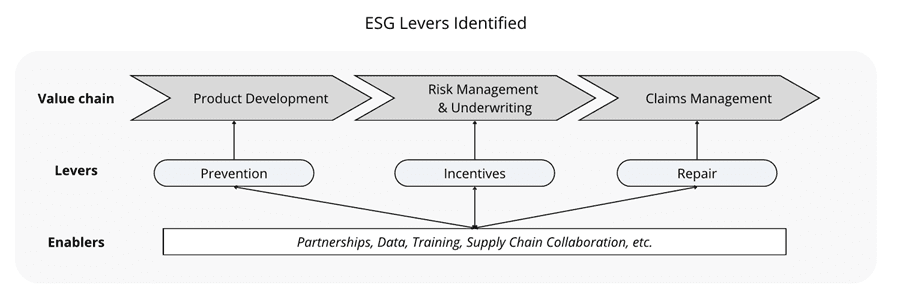
Figure 2: Key ESG drivers across the value chain
The first is prevention, which is integrated into the design of the products. In building insurance, it can take the form of natural hazard maps, available digitally, to adjust coverage, targeted recommendations to reduce exposure, anti-flooding measures, vulnerability diagnostics, or special support to anticipate claims. Such measures strengthen the resilience of policyholders and help to stabilise the claims experience assumed by insurance companies.
The second lever corresponds to incentives, put in place via pricing or contractual conditions. This can be, for example, a premium reduction after an energy renovation, a bonus granted when an SME adopts a decarbonisation plan or installs protection devices against natural damage, or a consulting package linked to measurable environmental commitments. This lever makes it possible to support the transition without resorting exclusively to ESG exclusions, which are often used in the sector - as a means of preventing "bad" risks - but which are likely to accentuate inequalities in access to protection. The incentive approach thus offers a path more aligned with a just transition, by guiding behaviours rather than marginalising the most vulnerable households.
The third lever concerns repair, a phase that concentrates a large part of the environmental footprint of non-life portfolios but where sustainable practices remain limited. Opportunities for improvement include prioritising repair rather than replacement, using low-carbon or recycled materials, or working with providers committed to circular approaches, such as sustainability-certified garages or local tradesmen.
However, the effectiveness of these levers depends on favourable conditions, such as the quality of the data, the ability to mobilise digital tools to analyse risks or guide decisions, the training of teams or collaboration with external partners, particularly in repair networks. Without these enablers, the levers identified struggle to translate into concrete changes on a large scale.
Finally, the framework makes it possible to objectify the trade-offs between environmental objectives and social equity. Rewarding renovated buildings can encourage climate adaptation, but exclude households that cannot afford to invest. Making these tensions visible does not claim to solve them, but allows them to be dealt with in a transparent and coherent way.
In this way, the framework helps transform ESG from a strategic principle into an operational tool that informs product evolution. Sustainable insurance is first and foremost played out in the products, where the choices of prevention, inclusion and impact materialise.
Towards a coherent transition
The integration of ESG factors into non-life products represents an ambitious project, marked by several challenges: achieving a common understanding of sustainability issues, coordinating internal functions with different logics, adapting data systems, training teams and absorbing transition costs. Added to this is the "first-in-a-player dilemma": the benefits of ESG integration materialise over the long term, while upfront investments may seem high in a context where other pressing priorities, such as digitalisation or AI, are already mobilising significant resources. The transformation of claims management, a central lever for impact, also requires the development of networks of partners established for many years, which constitutes a major operational and organisational challenge.
However, the sector's potential for transformation is real. The insurance market is highly interconnected: products are similar, benchmarking logics are constant and regulatory expectations are changing rapidly. In this environment, the advances made by a few players can spread quickly, through imitation or competitive alignment. The existence of a valuation framework contributes to this dynamic by making ESG integration more consistent, comparable and defensible to stakeholders.
Beyond the technical aspects, the integration of ESG at the product level offers an opportunity to redefine the role of insurance in society: from a model focused on compensation for losses to an active role of prevention, adaptation and building collective resilience. The transformation will be gradual, but it is already underway. By equipping the sector with tools capable of translating ambitions into concrete actions, it becomes possible to move towards a more coherent, responsible insurance that is truly aligned with the environmental and social challenges of the century.