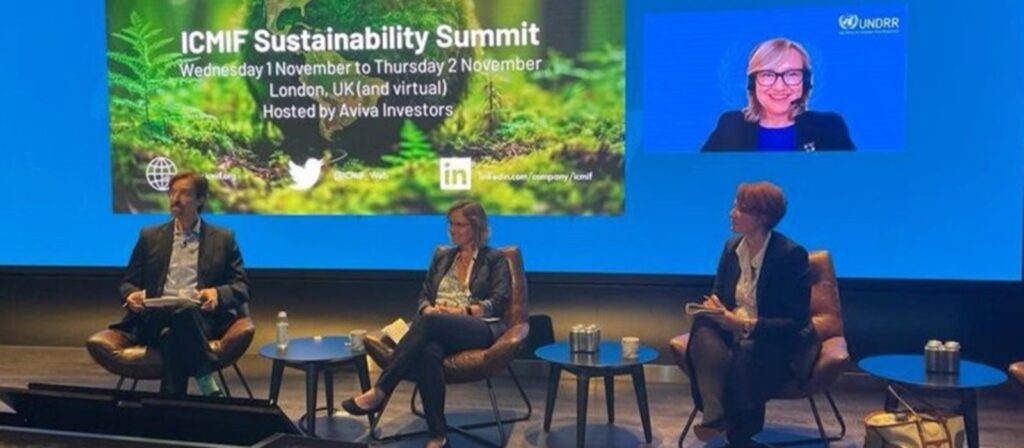
Sustainability within European insurance appears to be at an inflection point. After a surge of attention in recent years, the topic has slipped down board agendas and out of headlines, just as climate-related losses mount and protection gaps widen. R+V (Germany) reflects on this tension and argues for a reset: less box-ticking, more strategy; fewer short-term promises, more long-term execution.
From momentum to malaise
Across much of Europe, Germany in particular, momentum around sustainability has cooled. The Corporate Sustainability Reporting Directive (CSRD) has consumed time, money and people. Teams that entered the field to build future-proof products and drive decarbonisation have found themselves diverted into compliance, audit trails and internal control systems. The unintended consequence is disillusionment: the very resources hired to accelerate change have been absorbed by reporting.
Meanwhile, losses from natural catastrophes continue to rise and the share of uninsured losses remains stubbornly high. In parts of the world, insurance has begun to feel unaffordable for households and businesses facing escalating weather risk. If premiums cannot reflect risk, the foundations of the insurance model are threatened; if cover recedes, society ultimately shoulders the cost through the public purse. The timing could not be worse for sustainability to lose profile.
The multi-stakeholder squeeze
Sustainability inside an insurer sits at the intersection of competing demands. Customers expect fair pricing and resilience; supervisors and legislators impose evolving rules; employees seek purpose; boards seek returns; sales partners, investors, suppliers, competitors and the media each bring their own lens. Requirements proliferate laws, norms, labels, rankings, ratings and voluntary commitments, often without a clear hierarchy of what matters most for value creation and risk reduction.
Against this backdrop, many insurers have crafted standalone sustainability strategies. Yet those strategies may sit alongside, or even compete with, other corporate plans. The core challenge is not to have “a sustainability strategy”, but to embed sustainability into the strategy, so it informs underwriting, product design, claims, asset management, customer service and, above all, risk management.
Short horizons, long effects
One structural tension is temporal. Planning cycles in insurance typically span three to five years. Material sustainability outcomes, electrification in motor portfolios, climate adaptation in property, transition finance in investments, often need longer to deliver measurable financial returns. When capital is rationed and every euro can be spent only once, initiatives that mature beyond the planning window struggle to pass investment hurdles, even if they are essential for long-term competitiveness and societal resilience.
Humans also misread trajectories: we tend to overestimate short-term impacts and underestimate long-term ones. That pattern is visible in today’s technology hype cycles and it applies equally to sustainability. Early enthusiasm may have outpaced early results; the danger now is underestimating the cumulative effect of sustained climate action, or the compounding risks of inaction.
Evidence that action works
Despite the mood music, there is good news. The European Union has demonstrated a decoupling of emissions from economic growth over the past 15 years: GDP has risen while greenhouse gas emissions have fallen, and emissions intensity has declined. At the city level, practical measures matter: Paris’s sustained push on lower speed limits, cleaner transport and public mobility solutions has delivered demonstrable air-quality improvements over time. Policy aligned with consistent execution can move real-world indicators in the right direction.
Re-centring the insurer’s purpose
Insurance exists to enable. Modern insurance took shape by allowing merchants to cross oceans with confidence that, if disaster struck, losses would be shared and absorbed. Today, that enabling role is no less vital. Every major innovation requires someone to finance it and someone to insure it. The transition to a net-zero, climate-resilient economy is no exception.
It helps to remember the sector’s intellectual heritage, too. The now-ubiquitous ESG concept first emerged from within financial services as a pragmatic way to integrate material environmental, social and governance factors into analysis and asset management. Insurers, with their dual roles as risk carriers and long-term investors, stand at the centre of this integration challenge.
What “good” looks like now
To move from compliance fatigue to strategic progress, an insurer can concentrate on five practical shifts:
- Put risk first, not reports. Treat climate and nature risks as core underwriting and investment risks. Translate hazard, exposure and vulnerability into pricing, terms, accumulation limits and capital allocation, then let disclosures follow the business logic, not the other way around.
- Prioritise material levers. Focus on the parts of the value chain where it has the most influence. In non-life, that is underwriting guidelines, product design, pricing signals and claims supply chains (for example, repair over replace). In life and pensions, it is stewardship and capital allocation. In all lines, it is risk prevention and customer engagement.
- Extend the time horizon. Adjust hurdle rates, KPIs and incentive plans to recognise that transition and adaptation investments often pay back beyond five years. Where appropriate, use staged milestones, exposure reductions, loss-ratio improvements, portfolio intensity metrics, to evidence progress before the full financial benefit lands.
- Close the protection gap with design, not just price. Work with public authorities and industry pools to share tail risk; deploy parametric covers where speed and simplicity trump indemnity precision; embed risk-mitigation services and behavioural incentives to lower claims frequency and severity.
- Build credibility through consistency. Align public commitments with internal capital and capacity. If sustainability is “in the DNA”, it must be visible in product shelves, reinsurance placements, investment mandates and supplier contracts. Consistency reduces the gap between what is said on stage and what is decided behind closed doors.
Reclaiming attention without the hype
The current dip in media coverage and boardroom attention need not signal retreat. It can be an opportunity to recalibrate away from slogans and towards delivery. The task is to show, calmly and repeatedly, that well-designed measures reduce losses, stabilise earnings, improve customer trust and open growth options in new technologies, infrastructures and behaviours.
Sustainability in insurance is indeed at a turning point. If the sector treats this moment as the trough before renewed momentum, it can emerge with a clearer sense of purpose and a sharper toolkit. That means motivating colleagues, making the case with data, and keeping sight of why insurance exists: to make progress possible, even under uncertainty. If it does that, it can help build a more resilient, more sustainable society, and a stronger business, at the same time.